
Hydnophytum papuanum
Hydnophytum papuanum
Description
Growing requirements
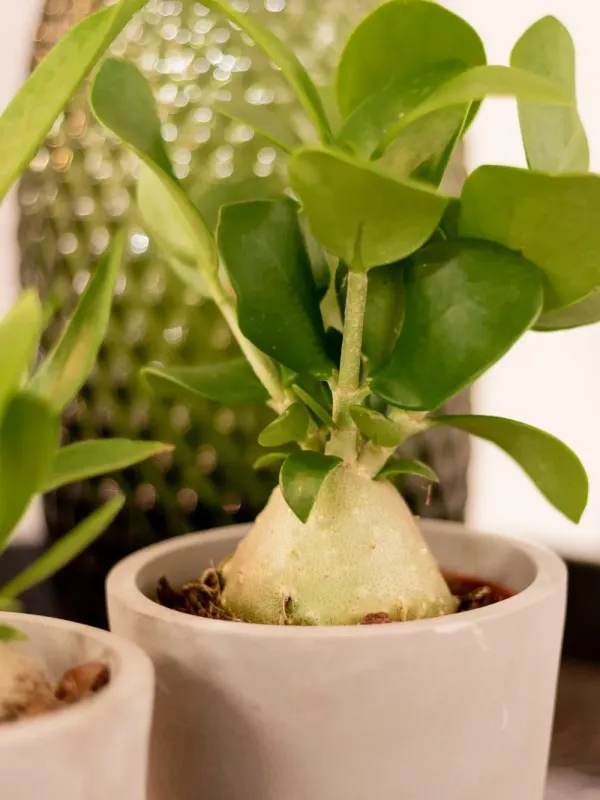
Hydnophytum papuanum is a fascinating species belonging to the Rubiaceae family. Native to the rainforests of Papua New Guinea, this plant is well-known as a myrmecophyte, which means it forms a mutually beneficial relationship with ants by providing shelter within its swollen, woody caudex.
To cultivate this species successfully in a domestic environment, you must simulate its native tropical habitat. The plant thrives in high humidity and temperatures ranging from 22 to 28 degrees Celsius. Consistent warmth is critical for its health throughout the year.
The choice of substrate is vital for an epiphytic plant. A coarse, well-draining mixture composed of orchid bark, perlite, charcoal, and sphagnum moss works best. This ensures optimal aeration of the root system and prevents moisture from accumulating around the caudex base.
Watering requires a balanced approach. It is essential to let the substrate dry out partially between waterings to prevent root rot. Using rainwater or distilled water is recommended, as this species can be sensitive to chemicals often found in municipal tap water.
Light requirements are focused on bright, indirect sun. While the plant can tolerate some morning sun, intense midday light can scorch its surface. A spot with filtered light or sheer curtains will provide the necessary energy for photosynthesis without damaging the plant's tissues.
Main diseases and pests
The primary health risk for Hydnophytum papuanum is fungal infection caused by overwatering or inadequate air circulation. Once rot establishes itself within the caudex, it is notoriously difficult to stop, often leading to the plant's rapid decline and death.
Pests like spider mites and mealybugs are common adversaries. These insects hide in the nooks and crannies of the caudex and leaf axils. Regular inspection is necessary to catch infestations early before they cause significant damage to the foliage.
Stagnant air is a major contributor to disease development in epiphytic plants. Using a small fan to keep the air moving gently around the plant can significantly reduce the likelihood of fungal outbreaks and improve the overall growth rate.
If the plant shows signs of pest infestation, immediate treatment with systemic insecticides or neem oil is necessary. It is crucial to monitor the plant for several weeks following treatment to ensure all life stages of the pests have been eliminated.
Proper hygiene is essential: remove dead leaves promptly to prevent them from decaying near the base of the plant, as decaying organic matter can easily harbor pathogens that might compromise the plant's health.