
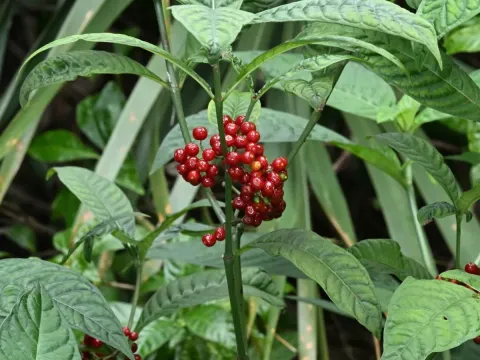
Ipecac
Cephaelis
Commercial propagation of ipecac is primarily achieved through vegetative methods, specifically the division of rhizomes or stem cuttings. Seed propagation is rarely practiced due to the low germination rate and slow early development of seedlings.
What the section contains

Ipecac
Planting material is prepared during the plant's dormant phase. Cuttings must include at least one healthy node to ensure successful establishment when planted in loose, humus-rich substrate.
The ideal time for planting in open or greenhouse conditions is at the beginning of the rainy season, which provides the necessary moisture for root development. Ipecac is extremely sensitive to soil moisture deficit during the first few weeks after planting.
The planting density is generally set at 30x30 cm, allowing sufficient space for root system development and ensuring proper airflow between plants.
The rooting process takes approximately four to six weeks, after which the plant begins to establish its aerial part and accumulate essential alkaloids in the root system.
Ipecac belongs to the Rubiaceae family and is a small, evergreen shrub native to the humid tropical forests of Brazil and Central America.
The crop requires a stable temperature range between 22 and 28 degrees Celsius for optimal growth. Even minor frost events can be fatal to the entire plantation.
The soil must be light, well-drained, and rich in organic matter, with a pH range of 5.5 to 6.5. Water stagnation in the root zone is strictly prohibited, as it leads to rapid root decay.
Ipecac is a shade-loving plant; therefore, in both natural habitats and commercial cultivation, it is often grown under a forest canopy or artificial shading nets. Exposure to direct sunlight causes leaf yellowing and reduces alkaloid biosynthesis.
Humidity levels should be maintained at 70–80%. In drier periods, a fine mist irrigation system is necessary to mimic the natural microclimate of the rainforest.
The primary commercial product is the ipecac root, which contains valuable alkaloids such as emetine and cephaeline. The yield depends on the age of the plant and the quality of agricultural practices.
The plant reaches harvest maturity at three to four years of age. Premature harvesting leads to low alkaloid content, making the processing of such raw material economically unviable.
The average yield of dried roots per hectare ranges from 500 to 800 kilograms under standard management. Intensive cultivation techniques can increase this yield by 15–20%.
Product quality is evaluated based on the percentage of emetine content in the dry mass. Modern pharmaceutical standards require at least 2% alkaloid concentration for industrial use.
After excavation, the roots are cleaned, washed, and dried under controlled temperature conditions (not exceeding 50 degrees) to prevent the degradation of active compounds.
The main threats to ipecac crops are soil-borne fungal pathogens that cause root rot, particularly in scenarios of poor drainage and excessive watering.
Nematodes are common pests that damage the root system, significantly reducing the marketable yield. Control is achieved through proper crop rotation and soil sterilization.
Leaf spots are frequent issues in conditions of high humidity and poor air circulation. Regular thinning of the plants is essential for maintaining a healthy environment.
Aphids and scale insects may attack young shoots, draining sap and hindering the growth of the bush. These are managed through biological control methods or mild insecticides.
- Implement strict quarantine measures for new planting material.
- Regularly loosen the soil to prevent compaction.
- Promptly remove diseased plants from the field to stop the spread of infection.
Harvesting is a labor-intensive process that requires extreme care to preserve the integrity of the fine roots, where the majority of the medicinal compounds are concentrated.
Plants are carefully dug up manually, using garden forks or specialized spades to minimize mechanical damage to the root system.
Harvesting should be performed during dry weather. Excessive soil moisture makes cleaning difficult and increases the risk of spoilage during the drying phase.
After the harvest, the aerial parts are separated from the roots. The leaves and stems, while non-marketable, can be composted and returned to the soil as organic matter.
The roots are washed and dried in well-ventilated areas, away from direct sunlight, until they reach a brittle, stable state suitable for processing and storage.