
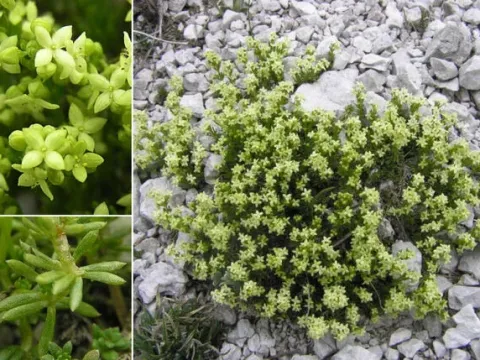
Galium margaritaceum
Galium margaritaceum
Sowing of Galium margaritaceum is typically carried out in the spring, once the soil has warmed to a temperature of 10-12 degrees Celsius. The optimal period for field seeding is mid-April to early May, ensuring sufficient moisture for seed germination.
What the section contains
Galium margaritaceum
Winter sowing is also a viable option, promoting natural seed stratification. In this method, seeds are sown in late October before the onset of persistent frosts, allowing for early and vigorous seedling emergence in the following spring.
The seeding rate depends on the intended use, whether for decorative purposes or biomass production, averaging 8-10 kilograms per hectare. It is essential to ensure uniform distribution of the fine seeds across the soil surface.
The planting depth should not exceed 1-1.5 centimeters. Excessive sowing depth significantly reduces germination energy, leading to sparse plant stands and lower overall yield for the plantation.
After sowing, it is recommended to lightly roll the area to improve seed-to-soil contact. This is a critical agronomic step that prevents the top layer of soil from drying out and encourages capillary moisture movement to the germination zone.
Galium margaritaceum belongs to the Rubiaceae family. As a perennial herbaceous plant naturally found in mountainous regions, it has specific requirements for light exposure and soil drainage to thrive in an agricultural setting.
The crop prefers light, well-aerated loamy or sandy loam soils with a neutral to slightly alkaline pH. Excessive moisture and stagnant water are detrimental to the root system, making areas with high water tables unsuitable for cultivation.
The plant exhibits moderate winter hardiness and can withstand brief frost periods during the growing season. However, for optimal vegetative biomass development, stable moderate air temperatures between 18 and 24 degrees Celsius are ideal.
During the active growth phase, the crop requires ample direct sunlight. Shading leads to leggy shoots, a decrease in the plant's decorative appeal, and a reduction in the concentration of bioactive compounds within the foliage.
Cultivation maintenance involves regular inter-row hoeing and weed control, especially during the first year. Galium margaritaceum is sensitive to competition for nutrients, so maintaining clean plots is essential for maximizing yield.
Harvesting of Galium margaritaceum aerial parts is performed during the peak flowering stage, when the concentration of beneficial compounds reaches its maximum. This typically occurs in mid-to-late summer, depending on regional climatic conditions.
Mowing of the green biomass is conducted using specialized machinery at a height of 5-8 centimeters above the soil level. This height protects the rhizomes and facilitates rapid regrowth of the plant for subsequent harvest cycles.
Immediately after cutting, the raw material must undergo primary processing, including the removal of debris and damaged parts. This is vital to prevent self-heating and fermentation of the plant material, which can degrade quality.
Drying is carried out in professional drying facilities at temperatures not exceeding 40-45 degrees Celsius or in well-ventilated shaded areas. Properly dried raw material retains its characteristic color, aroma, and chemical profile.
Once dried, the product is packed in airtight containers to protect it from moisture and direct sunlight. Proper storage ensures the preservation of the chemical composition and commercial quality of the crop for an extended period.