
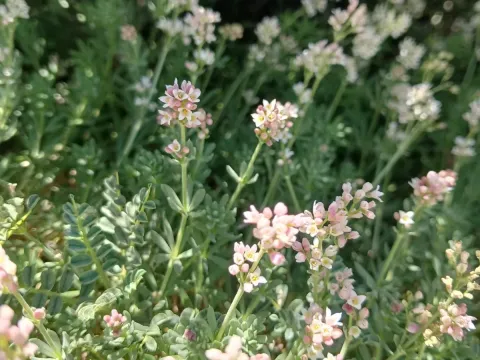
Galium incanum
Galium incanum
Galium incanum, commonly known as grey bedstraw, is a perennial herbaceous plant belonging to the Rubiaceae family. Native to arid regions, rocky slopes, and steppe environments, it has evolved to thrive in poor, rocky, and calcareous soils where many other species struggle to establish.
What the section contains
Galium incanum
The plant is distinguished by its branched, pubescent stems that often possess a distinctive greyish appearance. Its leaves are arranged in whorls, and its root system is deep and vigorous, providing excellent drought resistance. These features make it a resilient species suitable for challenging environmental conditions.
To cultivate Galium incanum successfully, one must prioritize well-drained soil. This species is highly susceptible to root rot caused by waterlogging, making proper drainage the most critical factor in site selection. It prefers full sun exposure to maintain its chemical composition and growth vigour.
Climate adaptability is one of the strengths of Galium incanum, as it displays high cold hardiness and the ability to withstand significant temperature fluctuations typical of mountain ranges. The optimal soil pH for this plant ranges from neutral to slightly alkaline, reflecting its natural habitat.
Economically, Galium incanum is utilized in the pharmaceutical industry due to its content of flavonoids and secondary metabolites. Additionally, it serves as an effective soil stabilizer for slopes and erosion-prone areas, where its ability to form stable mats helps maintain soil integrity.
The primary threats to Galium incanum include fungal pathogens such as powdery mildew and root rot, which typically thrive in environments with poor air circulation or excessive moisture. Maintaining an open planting density is essential for preventative care.
Insect pests such as aphids and various leaf-chewing beetles can cause significant damage to the foliage during the growing season. Constant field monitoring is necessary to identify infestations before they reach economic damage thresholds.
Weed management is critical during the establishment phase, as the plant grows relatively slowly. Mechanical weeding is the preferred method to reduce competition for nutrients and sunlight without relying on aggressive herbicides.
Biological control agents, such as introducing beneficial insects, are highly recommended to keep pest populations in check. This aligns with modern sustainable agriculture practices and preserves the quality of the harvested biomass.
Long-term soil management, including moderate fertilization and periodic resting of the land, helps prevent the build-up of soil-borne pathogens. A well-planned crop rotation is key to maintaining the long-term health of the plantation.