
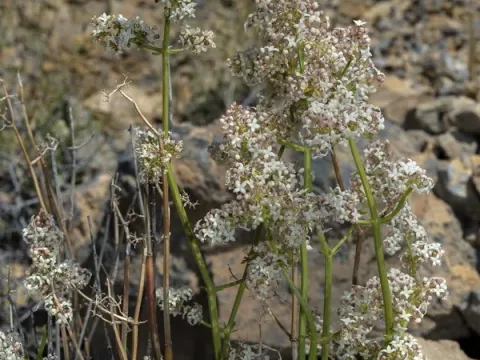
Galium ephedroides
Galium ephedroides
Galium ephedroides is a perennial herbaceous plant belonging to the Rubiaceae family. It is known for its distinct xerophytic structure, which allows it to thrive in arid and semi-arid environments.
What the section contains
Galium ephedroides
The plant exhibits high tolerance to drought and thermal stress. It thrives in well-drained, nutrient-poor, sandy, or rocky soils, mimicking its natural habitat in Central Asian steppes.
Optimal growth requires high light intensity, as shade inhibits the synthesis of secondary metabolites that are valuable for pharmaceutical applications.
Agronomic management involves maintaining low soil moisture levels. Over-irrigation is the primary cause of plant failure, as the root system is highly sensitive to hypoxia and waterlogging.
The main commercial value of this crop lies in its secondary metabolites, including iridoids and flavonoids, which are utilized in the development of natural health products and botanical medicines.
While generally robust, Galium ephedroides is susceptible to several physiological disorders when grown under improper environmental conditions.
Root rot, induced by fungal infections in humid, poorly drained soils, is the most common pathology leading to the decline of plantations.
Pests that may impact production include sap-sucking insects such as aphids and spider mites, which can weaken the plant and reduce the biomass yield.
Integrated pest management strategies focusing on early detection and physical barriers are preferred over chemical treatments to maintain the product's quality.
Crop rotation and selecting appropriate sites with natural drainage are essential strategies for mitigating the impact of pests and diseases in large-scale cultivation.