
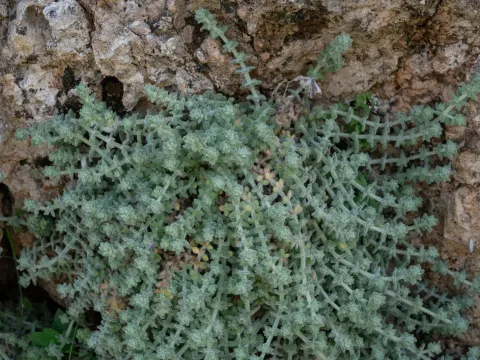
Galium canum
Galium canum
Galium canum is a perennial herbaceous plant belonging to the Rubiaceae family. This species is native to specific dry habitats, often thriving in regions where moisture availability is limited and soil conditions are challenging for less specialized flora.
What the section contains
Galium canum
The plant is categorized as a xerophyte, showing clear adaptations to drought. Its name refers to the greyish pubescence that covers the stems and leaves, effectively reducing transpiration and protecting the plant from intense solar radiation and drying winds.
Botanically, it forms low-growing mats or clusters, contributing to the ground cover in rocky terrains and limestones. Its root system is developed to forage for moisture deep within rocky crevices, ensuring survival during severe summer droughts common in its natural range.
Regarding soil requirements, the species flourishes in calcareous and well-drained soils. It does not tolerate waterlogging, as its roots are adapted to high-oxygen, porous substrates where excess water drains away quickly to prevent rot.
In terms of agricultural significance, while not a conventional crop, Galium canum serves as a model for studying drought-tolerant vegetation. It plays a critical role in stabilizing fragile soils on slopes, preventing the depletion of topsoil through erosion.
The health of Galium canum populations is primarily threatened by fungal diseases that emerge during unusually wet seasons. These pathogens usually manifest as leaf spots or stem lesions, which can weaken the plant's structural integrity if humidity persists.
Insect pests include various aphid species and beetles that target the foliage or flowers. These insects can reduce the vigor of the plant, especially if the infestation coincides with the plant's peak growth phase in the spring.
Environmental stress is a major factor that predisposes the plants to these biological threats. Shifts in local microclimates, such as increased shade from taller surrounding vegetation, can reduce the plant’s natural defenses and make it vulnerable to mildew.
Management of these threats in natural settings involves preserving the native plant community balance. By ensuring proper exposure to sunlight and avoiding soil compaction, the resilience of the species against common pests can be significantly enhanced.
Chemical intervention is not a standard practice for this plant due to its wild nature. Instead, maintaining healthy biodiversity levels supports the presence of natural predators, such as ladybirds, which keep aphid populations in check.