
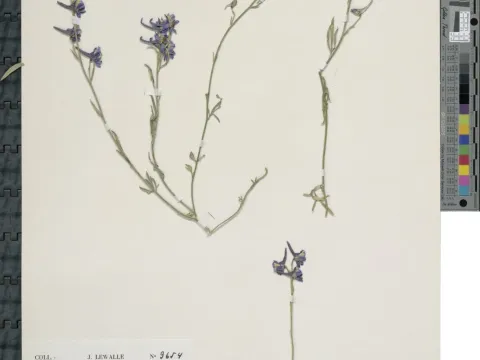
Delphinium balansae
Delphinium balansae
Delphinium balansae is a perennial herbaceous plant belonging to the Ranunculaceae family, known for its elegant floral spikes and specific growth habits.
What the section contains
Delphinium balansae
The seeds of this species possess deep dormancy and require a period of cold stratification, typically lasting four to six weeks at low temperatures to germinate successfully.
For outdoor sowing, it is best to scatter seeds in late autumn, allowing winter conditions to break the dormancy naturally before spring emergence occurs.
Indoor seed starting involves using a well-draining, sterile peat-based mix, keeping the containers in a cool location until the seeds are ready to sprout.
Seedlings are delicate during the initial stages and require careful handling to avoid root disturbance when being transplanted into their permanent garden positions.
This crop thrives in full sun exposure, although it benefits from afternoon shade in regions experiencing extremely high summer temperatures to prevent heat stress.
Well-drained, fertile soil with a slightly alkaline to neutral pH is essential for the healthy development of its fibrous root system and vertical stem growth.
Regular watering is necessary, especially during the peak of the growing season, to ensure that the plant maintains its vigor and produces abundant floral displays.
Mulching the base of the plant helps retain moisture and keeps the root zone cool, which is particularly beneficial during hot and dry spells in the growing cycle.
Adding a balanced fertilizer once or twice during the spring promotes robust vegetative growth and prepares the plant for its productive flowering phase.
Powdery mildew is a common fungal disease that affects foliage during periods of high humidity and poor air circulation, often leaving white blotches on the leaves.
Root rot, caused by overwatering or poorly drained soil, is a critical threat that can kill the plant quickly, often remaining invisible until symptoms are irreversible.
Slugs and snails are major pests that target young foliage in early spring, often decimating entire rows of seedlings if protection measures are not implemented.
Aphids tend to colonize the developing flower buds, causing malformation of the blooms and potentially transmitting viral pathogens throughout the plant population.
Effective management strategies include adequate plant spacing, prompt removal of infected debris, and the application of integrated pest management practices.