
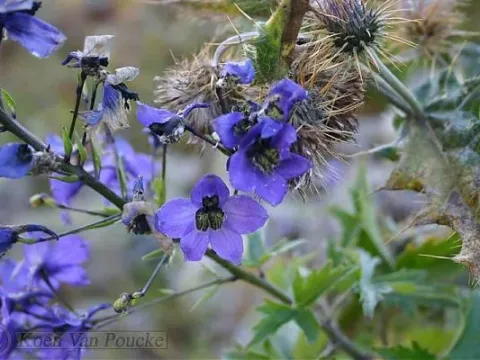
Delphinium araraticum
Delphinium araraticum
Delphinium araraticum is a distinct perennial plant belonging to the Ranunculaceae family, naturally occurring in mountainous regions.
What the section contains
Delphinium araraticum
The best time for sowing is autumn, allowing seeds to experience winter cold, which is critical for breaking dormancy and successful germination.
When spring sowing is planned, seeds must undergo cold stratification at low temperatures for several weeks to simulate natural winter cycles.
Seeds are placed at a shallow depth of less than one centimeter, covered lightly with fine soil to ensure adequate light exposure for sprouting.
Thinning the seedlings is essential to ensure that each plant has enough space to develop a strong root system and sturdy stems.
The species thrives in locations with full sun, as direct light is necessary for vigorous growth and the development of high-quality inflorescences.
Well-drained soil with a neutral to slightly alkaline reaction is preferred, as this plant cannot tolerate stagnant water around its roots.
During the peak growing season, regular watering is necessary, especially if rainfall is insufficient, to support the plant's metabolic processes.
Adding organic mulch around the base of the plant helps maintain soil moisture levels and prevents the development of weeds during the summer.
Regular fertilization with phosphorus and potassium boosters is highly recommended to encourage strong blooming and support winter hardiness.
Powdery mildew is a significant threat, particularly in regions with high humidity and poor air circulation between dense planting rows.
Root rot caused by fungal pathogens in wet soil is another major issue that can destroy plants rapidly if not managed through proper drainage.
Common pests include aphids and mites, which feed on the sap of the plant and may transmit viral diseases if not controlled in time.
Monitoring the foliage for signs of chlorosis or leaf spots is essential for early detection and immediate intervention with appropriate fungicides.
Biological control methods, such as encouraging natural predators, can be effective in reducing pest populations without relying solely on chemicals.