
American beachgrass
Calamagrostis breviligulata (Fernald) Saarela
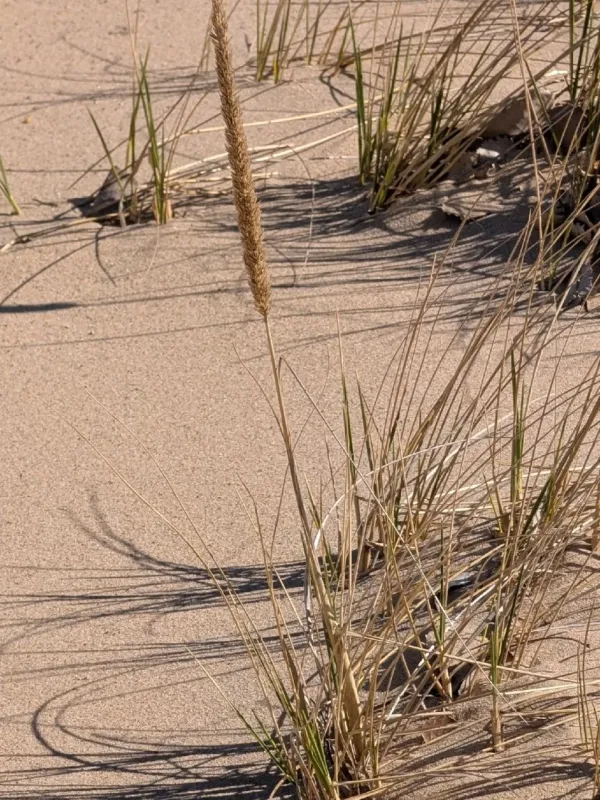
Description
Sowing dates
American beachgrass (Calamagrostis breviligulata), a member of the Poaceae family, is a perennial grass highly valued for its rhizomatous growth habit. Propagation is most successful through the planting of vegetative culms or rhizome divisions during the dormant season.
The optimal planting window typically begins in early spring, as soon as the soil is workable. This timing allows the root system to establish before the onset of summer drought, which is a major stress factor for young plants.
Planting depth is critical for survival; culms should be buried to a depth of 15 to 20 centimeters to ensure adequate moisture availability and stability within the shifting sands. Proper spacing, generally 30 to 50 centimeters apart, ensures rapid dune colonization.
Fertilization at the time of planting, especially with slow-release nitrogen, can significantly increase the rate of rhizome spread and cover density. However, excessive fertilization should be avoided to prevent nutrient leaching.
Post-planting management involves preventing mechanical disturbances, such as foot traffic or grazing, during the first two growing seasons. This allows the grass to form a robust, interconnected network of roots and rhizomes.
Growing requirements
This grass is perfectly adapted to the harsh, nutrient-poor conditions of coastal dunes. It thrives in well-drained, sandy soils and shows remarkable tolerance to salt spray and high salinity levels in the substrate.
Full sun is a mandatory requirement for the healthy development of American beachgrass. It is highly intolerant of shade, and even moderate canopy coverage will lead to significant vigor loss and thinning of the stand.
While the species is drought-tolerant, it performs best in regions with consistent moderate precipitation. It does not tolerate prolonged waterlogging, as the roots require highly aerated soil to function properly.
The temperature requirements are broad, covering temperate zones from sub-arctic to mild coastal climates. The plant exhibits excellent winter hardiness and can withstand freezing temperatures without damage to the root system.
Wind is actually a beneficial factor for this species. Sand burial, caused by wind erosion, acts as a growth stimulant for the grass, triggering further rhizome expansion and vertical tiller growth.
Yield
The primary economic and environmental value of American beachgrass lies in its role in coastal phytoremediation and soil stabilization. It is the premier species for building and maintaining sand dunes.
In some pastoral settings, the grass may provide limited forage value, especially in the early spring. However, due to its high silica and lignin content, it is generally considered a low-quality forage grass compared to domesticated pasture species.
Biomass production varies significantly based on site quality and nitrogen availability. Under favorable conditions, the grass can produce dense stands that stabilize significant volumes of shifting sand annually.
Seed production is possible but is rarely the primary focus of cultivation. Harvesting seeds is difficult due to the long awns and the tendency of seeds to disperse as soon as they mature.
Investment in this crop is typically justified by long-term ecological benefits, including flood protection for coastal properties and habitat creation for specialized dune fauna.
Main diseases and pests
American beachgrass is generally robust and free from serious diseases in its natural habitat. Most issues arise only when the plant is subjected to stress from extreme flooding or severe nutrient deficiency.
Pests are rarely a limiting factor in the production of beachgrass. However, certain types of aphids and chewing insects may occasionally infest the leaves, but they seldom require chemical intervention.
Root rot can become a threat if the planting site is poorly drained. Ensuring that the soil remains aerated and that there is no pooling of water is the most effective preventative measure.
The most significant threat to established stands is human activity, specifically uncontrolled vehicle access and excessive trampling. These actions destroy the protective vegetative cover and restart the erosion process.
Competition from invasive woody plants can gradually displace beachgrass. Periodic removal of opportunistic weeds and invasive shrubs is recommended to maintain the integrity of the dune-stabilizing grass community.