
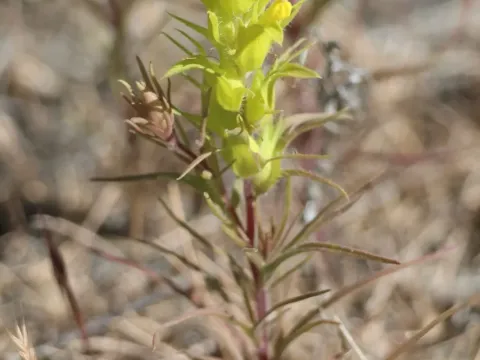
Orthocarpus
Orthocarpus
Orthocarpus is a genus of annual herbaceous plants belonging to the family Orobanchaceae. These plants are recognized as facultative hemi-parasites, meaning they possess chlorophyll and perform photosynthesis while also attaching to the roots of host plants for resources.
What the section contains


Orthocarpus
The botanical structure of the genus includes specialized root appendages known as haustoria. These organs allow the plant to penetrate the vascular tissues of surrounding species, supplementing its intake of water and essential mineral nutrients.
The native range of Orthocarpus is primarily located in western North America. They thrive in diverse ecosystems, ranging from coastal grasslands to high-altitude meadows, reflecting a strong adaptation to varied temperature and moisture regimes.
Environmental requirements for these plants are quite specific. They generally favor well-drained, nutrient-poor soils where competition from dominant grasses is reduced, allowing the hemi-parasite to establish its connection with appropriate host roots.
In terms of agricultural utility, Orthocarpus is not considered a cultivated crop. Research regarding this genus typically focuses on grassland ecology, conservation biology, and understanding the complex parasitic interactions that shape native plant communities.