
Purple owl's clover
Orthocarpus purpurascens
Description
Sowing dates
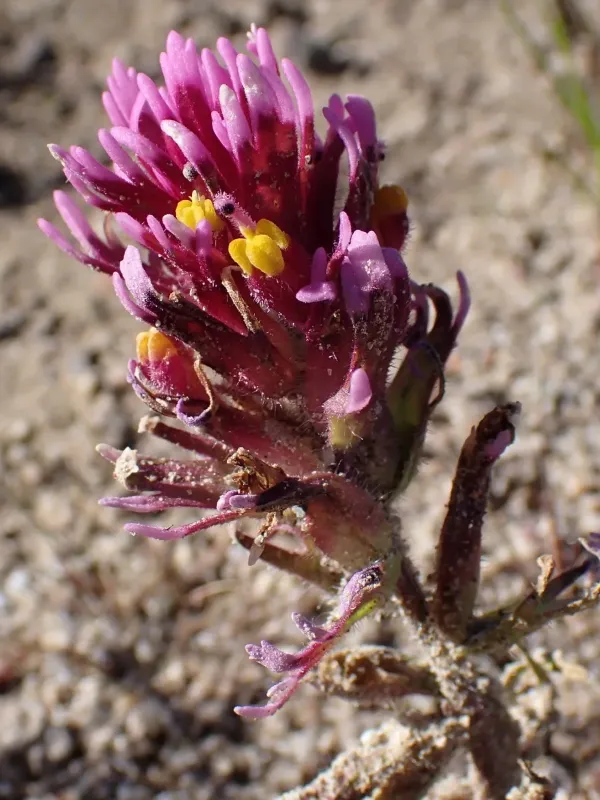
Orthocarpus purpurascens, commonly known as purple owl's clover, is a member of the Orobanchaceae family. It is an annual plant characterized by its vibrant, brush-like inflorescences.
Sowing should be performed in the fall, allowing seeds to experience a period of cold stratification during the winter months, which triggers germination.
As a facultative hemiparasite, the plant requires a host, typically a grass species, to attach to via root haustoria. Sowing should be done in conjunction with compatible host species.
The seeds are minute and should be broadcast over the soil surface, then lightly raked or pressed to ensure contact with the soil while remaining exposed to necessary light.
Germination usually occurs in late winter or early spring, provided that the soil remains consistently moist during the initial development phase.
Growing requirements
The species thrives in full sun, which is essential for developing its signature bright purple bracts during the flowering stage.
Well-drained soil is a non-negotiable requirement. The plant is prone to root rot in waterlogged conditions, making sandy or rocky soils ideal.
It prefers mild climatic conditions and is naturally adapted to seasonal Mediterranean climates with wet springs and dry summers.
Nutrient requirements are modest; the plant derives supplemental water and nutrients from its host, reducing the need for intensive fertilization.
The selection of the host plant is crucial; grasses that share similar ecological niches and blooming times are the best candidates for companionship.
Main diseases and pests
Fungal pathogens represent the most significant threat, particularly damping-off disease caused by excessive soil moisture in early development stages.
Pests such as aphids and spider mites can infest the foliage, particularly when the plants are stressed by lack of water or poor air circulation.
Competition from invasive weeds can stifle the growth of owl's clover, as it requires a certain level of physical space to establish its root connections.
Snails and slugs can cause significant damage to young seedlings, often consuming the foliage entirely during damp spring nights.
Maintenance should focus on managing the density of the planting to prevent the build-up of humidity around the base of the stems.