
Orobanche montserratii
Orobanche montserratii
Description
Growing requirements
Orobanche montserratii is a parasitic plant belonging to the Orobanchaceae family. It is a holoparasite, meaning it lacks chlorophyll and cannot perform photosynthesis, obtaining all necessary nutrients and water by tapping into the roots of its host plants.
This species is not an agricultural crop. Unlike related agricultural pests that affect sunflower or tobacco crops, Orobanche montserratii is primarily restricted to specific natural host plants, playing a specific role in mountain ecosystems.
The geographic distribution of this species is highly localized, found primarily in the Iberian Peninsula. It thrives in calcareous soils and rocky substrates typical of the Mediterranean mountainous landscapes, where sunlight is abundant but moisture availability is seasonal.
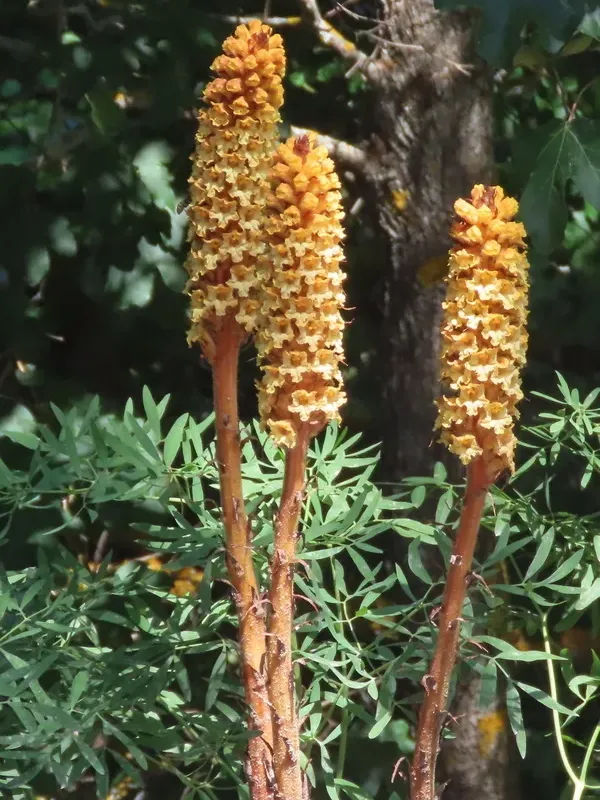
Botanically, the plant is characterized by a fleshy, unbranched stem lacking chlorophyll, which emerges from the soil only when it is ready to flower. Its structure is specialized for efficient seed production, with hundreds of tiny seeds produced in each capsule.
The plant's lifecycle is triggered by specific chemical exudates (strigolactones) released by the roots of the host plant. Without these chemical signals in the soil, the seeds remain dormant, potentially for several years, waiting for the presence of a compatible host.
Main diseases and pests
Habitat loss and the degradation of natural Mediterranean scrublands pose the most significant threat to the survival of Orobanche montserratii. The fragmentation of natural sites directly reduces the availability of host plants required for its survival.
Fungal infections, such as those caused by Sclerotinia species, can affect the plant during the flowering stage, especially under humid conditions, leading to necrosis of the flowering spike and failure to produce viable seeds.
Insect pests, including specialized weevils that bore into the stems or flowers, can severely impact the reproductive success of the plant, reducing the seed set and potentially threatening the long-term viability of local populations.
Climate change, manifesting as prolonged droughts or unpredictable rainfall patterns, affects the phenology of both the parasite and its host, potentially causing a mismatch that prevents the parasite from successfully attaching to the host root system.
Overgrazing by livestock in its natural habitat leads to physical trampling of the emerging stalks. Since the plant relies on a short window of time for flowering and pollination, such disturbances can be devastating for the current season's reproductive output.