
Orthocarpus pusillus
Orthocarpus pusillus
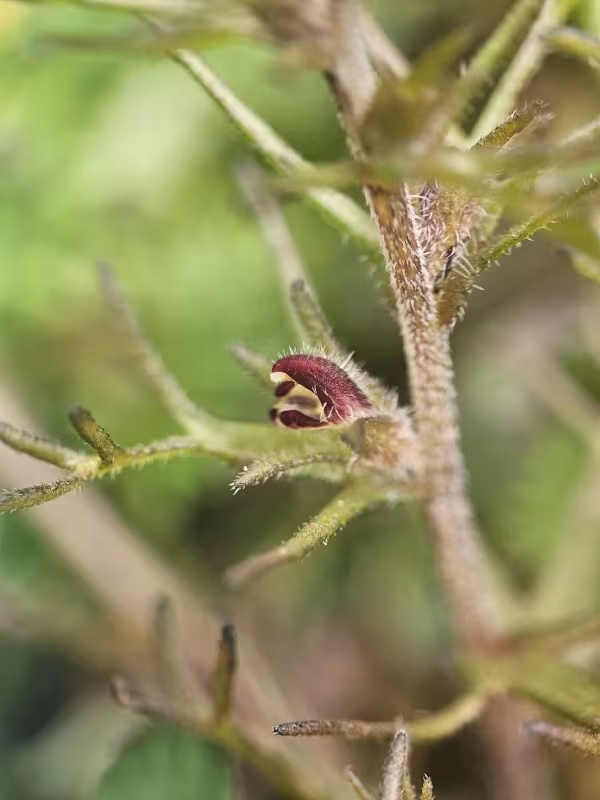
Description
Growing requirements
Orthocarpus pusillus is a member of the Orobanchaceae family, functioning as an annual hemiparasitic plant. Its unique survival strategy involves forming specialized root structures, known as haustoria, which attach to the roots of host plants.
The native habitat of this species is found primarily in Western North America. It thrives in open, sunny locations including coastal plains, wet meadows, and various disturbed grasslands where it can access suitable hosts.
Botanically, the plant exhibits a compact growth form. It is highly dependent on environmental light, requiring full sun exposure to complete its reproductive cycle effectively and produce viable seeds.
The species prefers moist, loamy soil conditions that provide consistent water availability during its growth phase. However, adequate soil aeration is crucial to prevent the onset of root-related complications.
Ecologically, the plant plays a specific role in its community by regulating the vigor of surrounding flora through its parasitic interactions. It is sensitive to shifts in the local biodiversity of its host species.
Main diseases and pests
The primary threats to Orthocarpus pusillus include habitat loss and landscape modification. Urban expansion and agricultural land development often destroy the specific ecosystems where this plant resides.
Pest pressures primarily come from insects that feed on plant sap, such as aphids. These infestations can significantly reduce the vitality of the plant, leading to decreased seed production.
Pathogenic threats include various fungal infections, particularly those affecting the root system or causing foliar necrosis under conditions of poor drainage or high humidity.
Inter-species competition often acts as a limiting factor. Since the plant relies on specific hosts, the invasion of non-native weeds that outcompete these hosts can indirectly threaten the survival of Orthocarpus pusillus.
Human activities, such as intensive grazing or soil compaction, pose a risk by physically damaging individual plants and altering the micro-environment necessary for their germination and growth.