
Arabian jasmine
Jasminum sambac (L.) Aiton
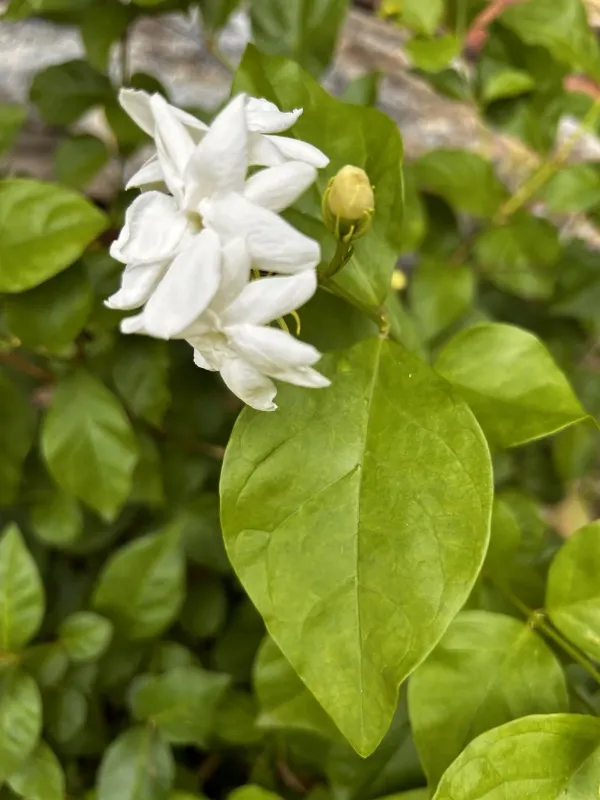
Description
Growing requirements
Jasminum sambac is a species of jasmine in the Oleaceae family, known for its fragrant flowers and glossy leaves. Originating from tropical Asia, this evergreen shrub or vine requires specific environmental conditions to thrive.
The plant is highly sensitive to cold and must be kept in a climate where temperatures remain above 10 degrees Celsius. It flourishes in warm conditions, with an ideal temperature range between 20 and 30 degrees Celsius.
For optimal growth, the soil must be nutrient-rich, well-draining, and slightly acidic to neutral in pH. Poor drainage often leads to root rot, which is a major agricultural concern for this crop.
Bright, indirect sunlight is essential for the plant to produce a high number of flowers. If grown in low-light conditions, the stems tend to become weak and the flowering cycle is significantly delayed.
Commercially, the plant is primarily cultivated for its use in perfumery and the tea industry, where the flowers are harvested for their intense aromatic properties used in flavoring tea blends.
Main diseases and pests
Root rot is the most common disease associated with Jasminum sambac, typically caused by overwatering and waterlogged soil conditions. Proper irrigation management is vital to preventing this issue.
Pest pressures primarily come from spider mites, aphids, and scale insects. These pests thrive in dry environments and can quickly damage the foliage and hinder the development of flower buds.
To control these pests, farmers often employ integrated pest management strategies, including the use of targeted insecticides, neem oil, and regular monitoring of plant health.
Maintaining proper humidity and ensuring good air circulation around the plants significantly reduces the risk of fungal infections and helps prevent the spread of pests between individual shrubs.
Regular sanitation and pruning are also critical practices. Removing dead or diseased branches prevents the accumulation of pathogen-harboring debris within the canopy.
Harvesting
Harvesting flowers from Jasminum sambac is a meticulous manual process. Workers collect the flowers in the bud stage, just before they open, to maximize the concentration of volatile oils.
The harvest timing is typically done early in the morning when the fragrance is most intense and the oil content in the petals has reached its peak level.
Post-harvest handling is critical, as the flowers are highly perishable and must be processed within hours to avoid degradation of the delicate aromatic compounds.
Strict quality control during the harvest ensures that only fresh, high-quality buds are selected, as damaged flowers can impart off-notes to the final fragrance extracts.
Industrial extraction methods, such as solvent extraction, are then used to create jasmine absolute, a premium ingredient valued for its deep and complex floral scent.