
Pink jasmine
Jasminum polyanthum Franch.
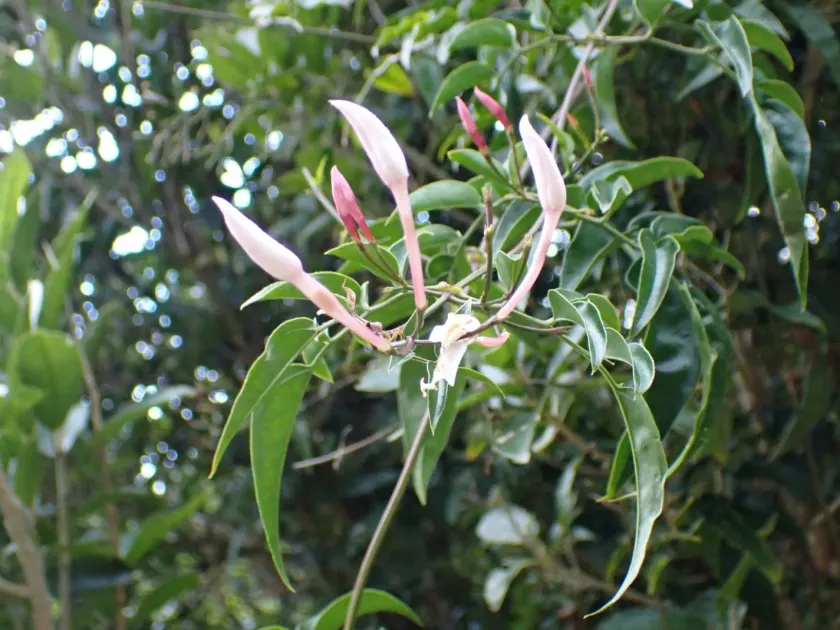
Description
Growing requirements
Pink jasmine (Jasminum polyanthum) is a vigorous, evergreen climbing vine belonging to the Oleaceae family. Originating from China, it is widely recognized for its high ornamental value and fragrant white flowers that emerge from pink buds.
The plant thrives in well-drained, fertile soils with a slightly acidic to neutral pH. It is crucial to maintain a substrate rich in organic matter, such as a mix of peat moss, pine bark, and perlite, to ensure proper root aeration and drainage.
Climate requirements include bright, indirect sunlight to encourage heavy blooming. While it can withstand mild temperature fluctuations, it requires a cool dormant period (10–13°C) during winter to initiate flower bud development for the following spring.
Water management is vital; the plant requires consistent moisture during the growing season but is highly susceptible to root rot if left in standing water. Misting or using a humidifier is recommended to maintain the high humidity levels typical of its native subtropical environment.
Agronomic maintenance includes heavy pruning after flowering to manage the aggressive growth habits of the vine. Regular training on trellises or supports is necessary to maintain the desired structural form and ensure canopy airflow.
Main diseases and pests
The most common pests affecting Jasminum polyanthum are spider mites, especially in indoor environments with low humidity. They thrive on the underside of leaves, causing yellow stippling and eventual leaf drop.
Scale insects and aphids are also frequent threats. These pests sap the vitality of the plant by feeding on phloem, leading to stunted growth and the development of sooty mold on the honeydew secreted by these insects.
Root rot caused by Phytophthora or Pythium species is a primary disease concern. It is frequently triggered by overwatering or the use of heavy, non-porous soil mixtures that impede root respiration.
Leaf chlorosis is frequently observed when the plant is grown in alkaline soils or watered with hard, mineral-rich water. This condition prevents the efficient uptake of essential micronutrients like iron and magnesium.
- Regular monitoring for early signs of infestation.
- Use of systemic insecticides or horticultural oils for pest management.
- Ensuring proper sterilization of tools to prevent cross-contamination of pathogens.