
Italian jasmine
Jasminum humile L.
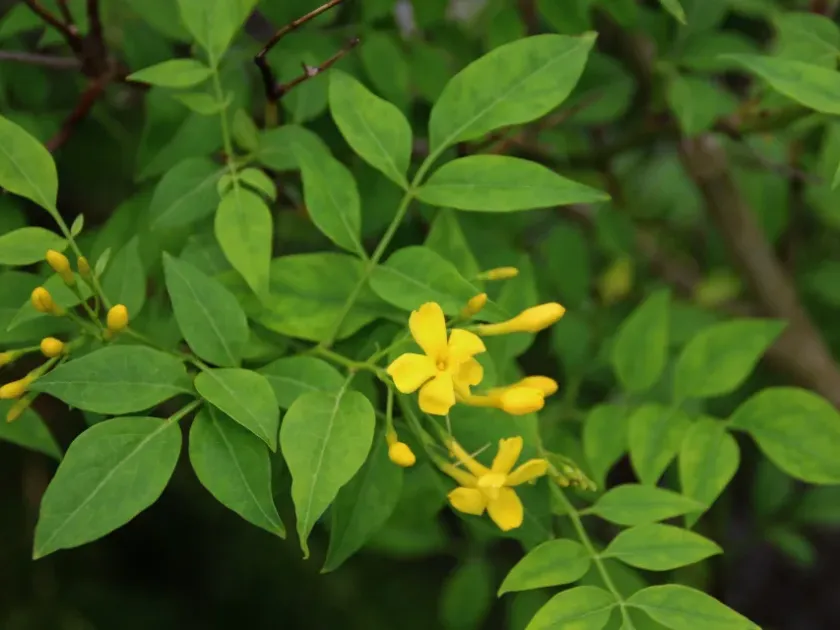
Description
Growing requirements
Italian jasmine (Jasminum humile L.) is an evergreen to semi-evergreen shrub belonging to the Oleaceae family. Native to the mountainous regions of China and the Himalayas, it is well-regarded in horticulture for its resilience and bright yellow flowers.
Botanically, it is a spreading shrub that can reach heights of 1 to 2 meters. It features attractive compound, pinnate leaves with 3 to 7 leaflets. The plant is prized for its ability to maintain a lush appearance throughout the growing season.
For optimal growth, Italian jasmine requires a sunny location with well-drained, fertile soil. While it is adaptable to various soil types, maintaining a neutral or slightly acidic pH level helps in nutrient absorption and promotes vigorous development.
Agrotechnical maintenance includes consistent watering, especially during the establishment phase and periods of drought. Pruning is essential; it should be performed immediately after the flowering season to manage the shrub's shape and encourage dense branching for the following year.
This species is widely used in landscape architecture as a specimen plant, in mixed borders, or for training against walls. Its hardiness makes it a reliable choice for temperate climate gardening, provided it is protected from extreme winter frosts.
Main diseases and pests
Common pests that may affect Italian jasmine include spider mites and scale insects. These pests are particularly problematic in dry conditions, often settling on the undersides of leaves or along the stems, causing stunted growth.
Aphids are another frequent pest, typically gathering on soft, new growth and flower buds. Infestations can lead to the secretion of honeydew, which may subsequently attract sooty mold, further compromising the plant's health and aesthetic appeal.
Fungal diseases such as powdery mildew can occur if the plant is grown in areas with poor air circulation or high humidity. Symptoms include a whitish, flour-like dusting on the foliage, which can eventually lead to leaf drop.
Prevention involves strategic placement to ensure adequate sunlight and airflow, alongside sanitation practices such as removing dead or diseased plant material. Avoiding overhead irrigation can also reduce the risk of fungal infections.
When chemical treatment is necessary, horticultural oils or systemic insecticides should be used in accordance with environmental safety standards. Keeping the plant healthy through appropriate fertilization and regular inspection is the most effective way to prevent outbreaks.