
Jasminum beesianum
Jasminum beesianum Forrest & Diels
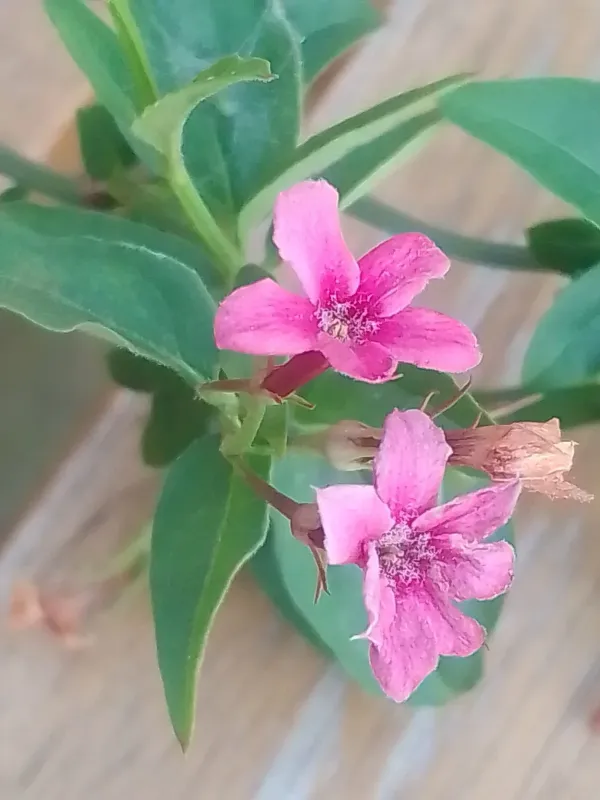
Description
Sowing dates
Propagation of Jasminum beesianum is typically achieved through semi-ripe cuttings taken in late spring or early summer for best results.
Seed propagation is possible but requires a period of cold stratification to overcome dormancy and improve germination rates significantly.
The ideal time to transplant established seedlings into the garden is in the spring, once the soil has warmed up and frost risks have passed.
Planting locations should feature deep, nutrient-rich soil and excellent drainage to prevent the root system from waterlogging.
Providing a sturdy trellis or support system is essential at the time of planting to encourage vertical growth and structural stability.
Growing requirements
Jasminum beesianum belongs to the Oleaceae family and is a deciduous or semi-evergreen climber originating from the mountainous regions of Western China.
The plant thrives in full sun to partial shade, requiring protection from cold, drying winds that can cause damage to the foliage and stems.
Soil quality is paramount; the species prefers a fertile, loamy substrate with a neutral to slightly acidic pH level for optimal development.
While moderately hardy, it requires winter protection in cooler climates, often needing mulching or container relocation to frost-free areas.
Regular maintenance includes consistent irrigation during the growing season and periodic pruning to manage the density and flower production.
Main diseases and pests
Aphids are the most common pests, frequently clustering on new shoots and flower buds, causing sap depletion and stunted growth.
Spider mites may infest the plant during hot, dry spells, necessitating frequent foliage inspection and humidity management to prevent damage.
Fungal issues such as powdery mildew can occur if there is inadequate airflow through the canopy, often due to overcrowding or high humidity.
Root rot is a major threat if the plant is grown in heavy, poorly draining soils or subjected to prolonged over-watering conditions.
Integrated pest management, including pruning for airflow and applying organic fungicides, is recommended to keep the plant healthy and vigorous.