
Common Jasmine
Jasminum officinale L. x Jasminum polyanthum Franch.
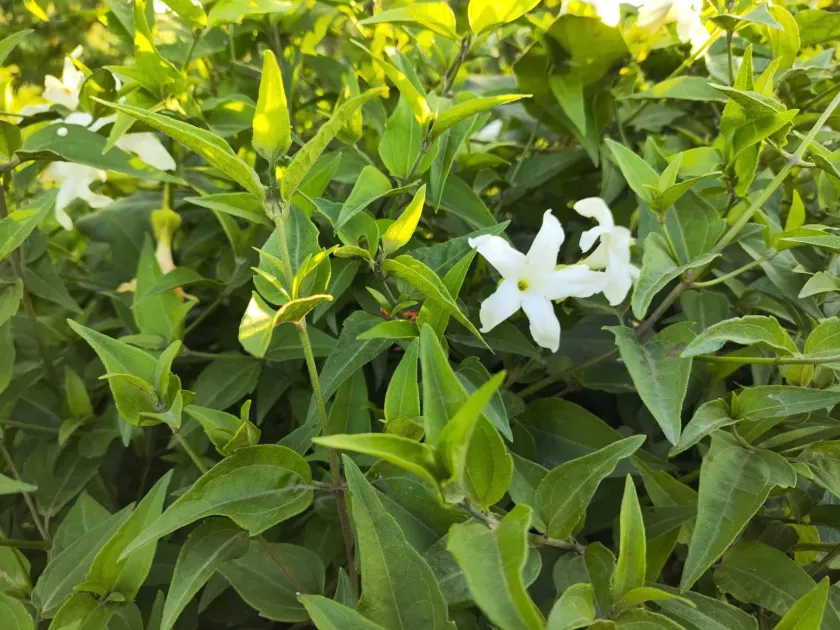
Description
Growing requirements
Common Jasmine (Jasminum officinale) is a perennial woody vine belonging to the Oleaceae family. It is globally recognized for its intensely fragrant white flowers, which are highly prized for the extraction of essential oils and use in fine perfumery.
The species is native to a broad region spanning from the Caucasus and Northern Iran to the Himalayas and Western China. It is commercially cultivated in warm-temperate regions, requiring specific environmental conditions to thrive and produce high-quality blooms.
The plant requires full sun to partial shade, with full sun being preferable for maximum flower production. It thrives in well-drained, moderately fertile soil with a slightly acidic to neutral pH, ensuring that water does not accumulate around the root system.
Temperature management is crucial; while it can tolerate light frosts, it performs best in mild climates where temperatures remain consistently above freezing. In cooler zones, it is often grown in greenhouses or as a seasonal container plant.
Agronomic practices involve regular pruning after the flowering season to maintain vigor and stimulate new growth. Providing a sturdy trellis or support structure is essential, as the plant is a vigorous climber that requires vertical space to spread.
Main diseases and pests
Jasmine is susceptible to common greenhouse and garden pests, including aphids, whiteflies, and spider mites. These insects can significantly stunt growth and reduce flower yields if left unchecked, requiring integrated pest management (IPM) strategies.
Fungal issues such as root rot and powdery mildew are prevalent when plants are kept in stagnant air or damp, poorly drained soil. Maintaining proper spacing and ensuring adequate airflow are the primary methods for preventing these common outbreaks.
Harvesting
Harvesting is an intensive process, as jasmine flowers must be picked individually at the specific moment of opening. The content of volatile aromatic compounds is at its peak during the pre-dawn hours, dictating a strict early morning harvest schedule.
Post-harvest handling is critical for maintaining oil quality. Flowers are processed immediately after picking to prevent fermentation and loss of fragrance, typically through solvent extraction or maceration techniques to yield premium jasmine absolute.