
Stephan's Jasmine
Jasminum x stephanense Lemoine
Description
Growing requirements
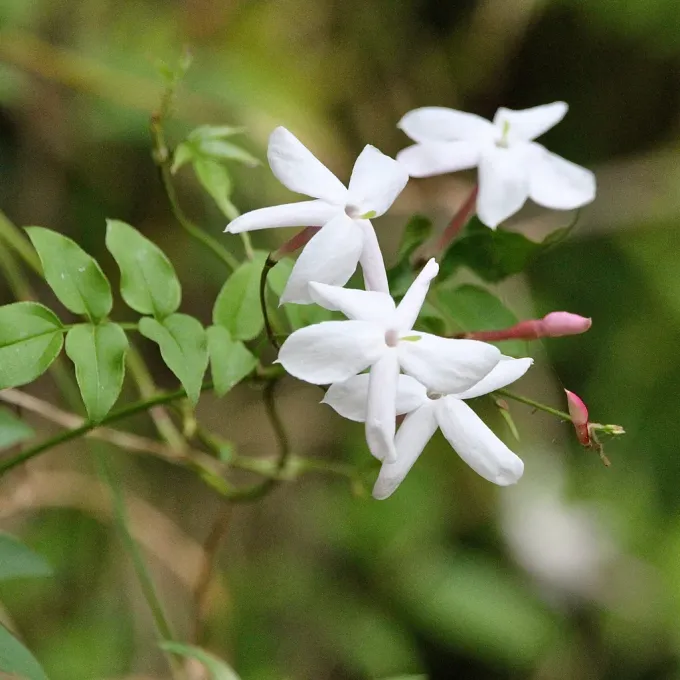
Stephan's Jasmine (Jasminum x stephanense) is a deciduous to semi-evergreen climbing shrub belonging to the Oleaceae family. It is a hybrid originating from crosses between J. beesianum and J. officinale, known for its pale pink, highly fragrant flowers.
This plant thrives in full sun or partial shade in a sheltered position. While it has some tolerance to cold, it generally requires a warm wall or a protected spot in cooler climates to survive winter temperatures without significant damage to its stems.
It prefers fertile, well-draining soil that remains moist but not waterlogged. When planting in pots, a high-quality loam-based compost is recommended to ensure both nutrient availability and proper moisture retention for the developing root system.
Cultivation practices involve training the stems along wires, trellises, or pergolas to maximize its decorative potential. Regular pruning is essential to control its vigorous growth, which should be performed immediately after the flowering period ends.
In landscaping, Stephan's Jasmine is primarily used for covering walls, fences, or arbors. Its sweet fragrance and delicate aesthetic make it a prized plant for cottage gardens and ornamental spaces where vertical growth is desired.
Main diseases and pests
Like many Jasminum species, Stephan's Jasmine can be susceptible to fungal issues such as powdery mildew, especially in environments with poor air circulation or high humidity. Ensuring proper spacing between plants helps to mitigate these risks.
Aphids are the most common insect pests encountered during the growing season. They tend to cluster on tender new shoots and buds, potentially weakening the plant and causing leaf curling if left unmanaged.
Spider mites can also become a problem during hot, dry summer months. These pests prefer the underside of leaves and can cause yellowing and premature leaf drop if the plant is under drought stress.
To control these threats, gardeners should utilize appropriate horticultural oils or systemic insecticides. Maintaining plant vigor through consistent watering and fertilization is the best natural defense against pest infestations.
Root rot is a critical threat caused by overwatering or poorly draining soil. To prevent this, always ensure the planting site or container has an efficient drainage mechanism to allow excess water to escape freely.