
Common jasmine
Jasminum officinale L.
Description
Growing requirements
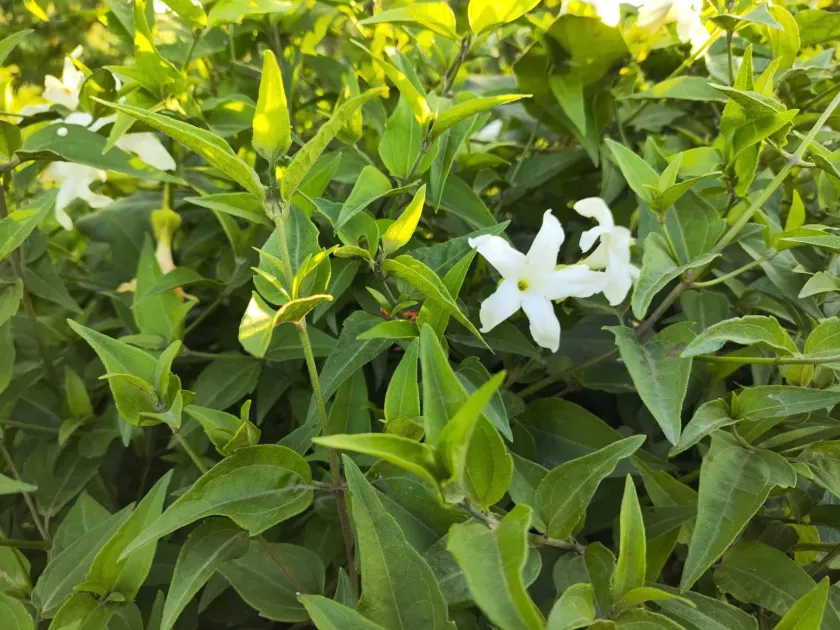
Common jasmine (Jasminum officinale L.) is a perennial flowering vine belonging to the Oleaceae family. It is characterized by its vigorous, twining habit, reaching significant lengths, and its pinnate, opposite leaves. The plant is prized for its highly fragrant white flowers which bloom in clusters.
The plant originates from the Caucasus, northern Iran, Afghanistan, and the Himalayan regions of China. Currently, it is cultivated worldwide, particularly in warm temperate and subtropical climates where it is valued both as an ornamental plant and as a source for high-quality essential oils used in the industry.
Jasmine requires sunny locations to thrive and produce its aromatic flowers effectively. While it prefers full sun, it also benefits from protection against strong, cold winds that can damage the delicate stems and foliage. It is generally hardy in USDA zones 7–10, depending on the specific cultivar and microclimate.
Regarding soil requirements, common jasmine prefers well-drained, fertile, and slightly acidic to neutral soil. It performs best in loam-based substrates that provide consistent moisture but avoid waterlogging, which is detrimental to the plant's health and can lead to the decay of the root system.
The agricultural management of this crop involves regular pruning to maintain the plant's shape and stimulate blooming. Irrigation should be adjusted based on the growth cycle, with increased water needs during the peak summer months. Fertilization with balanced nutrients supports optimal flower production.
Yield
The primary agricultural output is the jasmine essential oil or concrete, extracted from the flowers. This is a critical raw material for the luxury fragrance and cosmetic industries. Due to the high number of flowers required for oil extraction, it is considered a high-value industrial crop.
Main diseases and pests
Common jasmine is susceptible to pests such as aphids, spider mites, and whiteflies, which tend to infest the plant during hot and dry spells. Integrated pest management, including the use of neem oil or targeted insecticidal soaps, is often necessary to prevent significant damage to the photosynthetic foliage.
Fungal diseases like powdery mildew are common in environments with high humidity or poor air circulation. Overwatering can also lead to root rot. Maintaining proper plant spacing and ensuring the soil has excellent drainage are fundamental strategies for reducing the risk of disease outbreaks in plantations.
Harvesting
Harvesting is labor-intensive and must be done manually. Flowers are picked in the early hours of the morning when the essential oil content is at its peak. This precise timing is crucial to ensure the quality of the aromatic oil and to maximize the overall yield of the harvesting season.