
Winter jasmine
Jasminum nudiflorum Lindl.
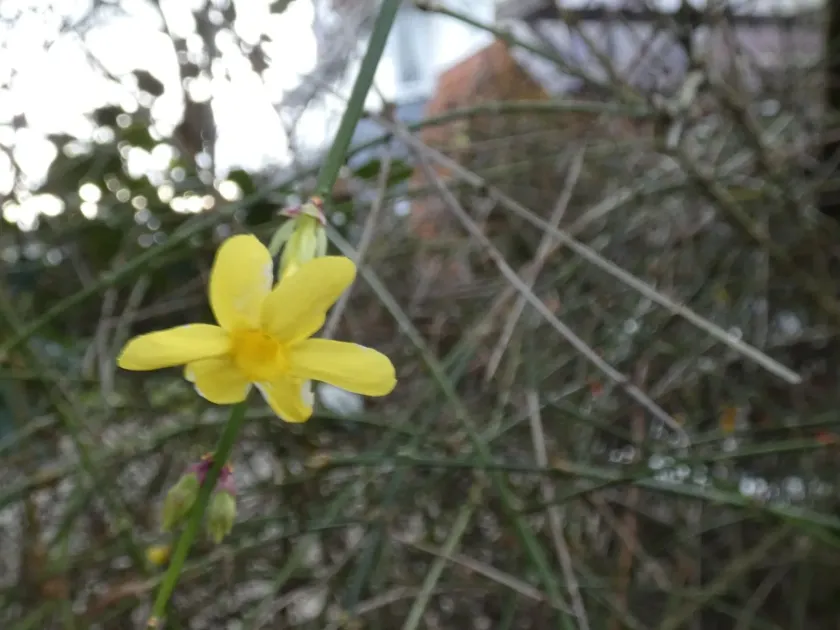
Description
Growing requirements
Winter jasmine (Jasminum nudiflorum Lindl.) is a member of the Oleaceae family. It is a deciduous shrub highly valued for its striking yellow flowers that emerge on bare stems in late winter, providing a splash of color long before spring arrives.
Originally native to China, this species has been widely introduced to various temperate climates. It is primarily used as an ornamental wall shrub, climber, or ground cover, depending on how it is trained and pruned by the gardener.
The plant thrives in sunny to partially shaded locations. For optimal development, it requires a sheltered spot away from strong, drying winds. Planting against south-facing walls provides both protection and the heat required for prolific flowering.
Soil requirements focus on fertility and drainage. While it can adapt to various soil types, it performs best in rich, moist but well-drained loam. Stagnant water is detrimental, as it can cause root rot, especially during dormant periods.
Care routines center on post-flowering pruning. Removing old and overcrowded wood encourages vigorous new growth, which is essential for the next season's bloom. If left unpruned, the plant can become straggly and lose its structural vigor over time.
Main diseases and pests
Fungal diseases, including leaf spot and dieback, represent the primary health threats, particularly in environments with poor air circulation or excessive moisture during the early spring season.
Pests such as aphids and spider mites are common concerns. Aphids tend to attack new shoots, while spider mites flourish during dry, hot weather, potentially leading to leaf yellowing and premature shedding.
Integrated pest management suggests keeping the base of the plant clear of debris and ensuring that the shrub is not overcrowded by surrounding vegetation. This reduces the humidity levels that pathogens favor.
Systemic fungicides may be used if fungal pressure is high, though hygiene practices are usually sufficient for garden specimens. Regular monitoring is the most effective tool for preventing significant infestation.
In addition to pests, winter jasmine can suffer from nutrient deficiencies if grown in poor soil. Providing organic mulch and a balanced fertilizer in spring helps maintain plant health and vigor.