
Minquartia guianensis
Minquartia guianensis
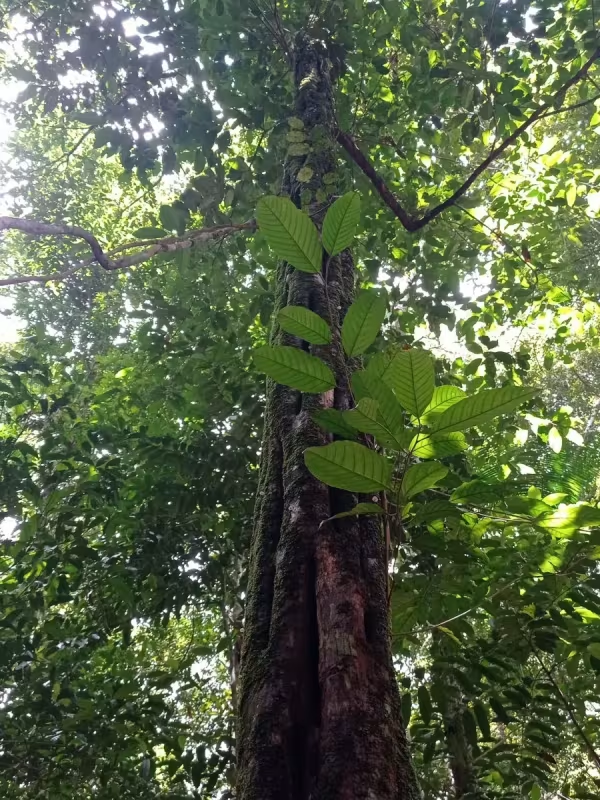
Description
Growing requirements
Minquartia guianensis, commonly known as acua or mana, is a large evergreen tree belonging to the Olacaceae family. It is native to the tropical rainforests of Central and South America.
The tree thrives in regions with high precipitation and consistent tropical temperatures, typically found within the Amazon and Orinoco basins.
It prefers deep, well-drained loamy soils rich in organic matter. While it is adapted to the competitive environment of the primary forest, it requires adequate space for root expansion.
When cultivating this species, shade management is critical during the initial growth stages, as young saplings are highly sensitive to direct sunlight and water stress.
Success in propagation involves maintaining the symbiotic relationship with native soil microbiota, which is essential for nutrient uptake and overall tree vigor.
Yield
The primary yield from Minquartia guianensis is its high-quality, dense timber, which is exceptionally durable and resistant to decay, termites, and fungal degradation.
The timber is widely favored for heavy construction applications, including bridge components, railway sleepers, fence posts, and marine construction materials.
Beyond timber production, the tree's fruit and bark contain secondary metabolites that are of interest for pharmacological studies and traditional medicine practices.
The yield of mature timber is realized only after a long rotation period, making it a focus of reforestation projects rather than short-term cash cropping.
The utilization of the species contributes to the economy of rural communities that manage sustainable harvesting of non-timber and timber forest products.
Main diseases and pests
Habitat loss due to large-scale deforestation and agricultural expansion is the most significant threat to the natural populations of this species.
Root rot pathogens represent a risk in managed plantations, especially if soil drainage is inadequate or if the site is prone to waterlogging.
The growth of saplings can be hindered by aggressive invasive weeds and vines, which may choke young trees and restrict their access to light and nutrients.
Stem-boring insects may damage the woody tissue, potentially lowering the grade of the timber and providing entry points for wood-decay fungi.
Over-harvesting without adequate replanting strategies threatens the genetic diversity and long-term sustainability of local Minquartia stands.