
Chondrodendron tomentosum
Chondrodendron tomentosum
Description
Growing requirements
Chondrodendron tomentosum is a woody climbing vine belonging to the family Menispermaceae. It is native to the tropical rainforests of South America, primarily occurring in the Amazon and Orinoco river basins where it thrives in humid environments.
The plant requires deep, fertile, and well-drained soils rich in organic matter. Its development is strictly bound to the tropical climate, which provides consistent temperatures and high humidity levels throughout the year, necessary for its vigorous vine-like growth.
As a forest climber, it relies on tall trees for structural support. It exhibits a rapid growth pattern when it reaches the forest canopy, demonstrating a strong phototropic response to capture available sunlight within the dense vegetation.
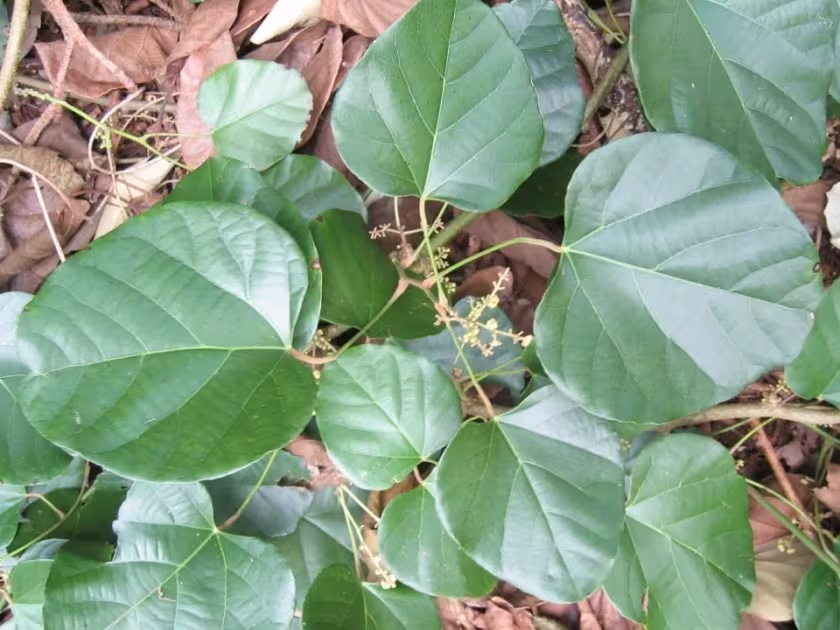
The botanical structure of the vine features large, cordate leaves covered in a dense, felt-like tomentum on the underside, which assists in moisture retention. These morphological adaptations are essential for survival in its humid natural habitat.
The plant is historically significant in ethnobotany as the primary source of curare, a potent arrow poison used by indigenous tribes. Modern science has isolated compounds like tubocurarine, which revolutionized anesthesiology by acting as a muscle relaxant.
Main diseases and pests
Deforestation represents the most significant threat to the long-term survival of Chondrodendron tomentosum. The removal of host trees leaves the vine without support and destroys the humid microclimate it requires for healthy growth.
Various fungal pathogens prevalent in tropical regions can infect the bark and vascular tissues of the vine. These infections often proliferate in areas where the canopy is broken and the plant is stressed by environmental changes.
Wood-boring insects and other plant pests pose a constant threat to the structural integrity of the vine. Such infestations often facilitate the entry of secondary pathogens, eventually leading to the decline of the plant.
Unregulated harvesting of the bark for the production of pharmaceutical alkaloids places significant pressure on wild populations. Since the plant is not cultivated on a commercial scale, every harvest directly reduces the biomass of the ecosystem.
The slow reproductive rate and the specific ecological niche occupied by the plant make it highly sensitive to disturbances. Current conservation efforts focus on maintaining the integrity of Amazonian forests to protect this species.