
Pachira
Pachira macrocarpa
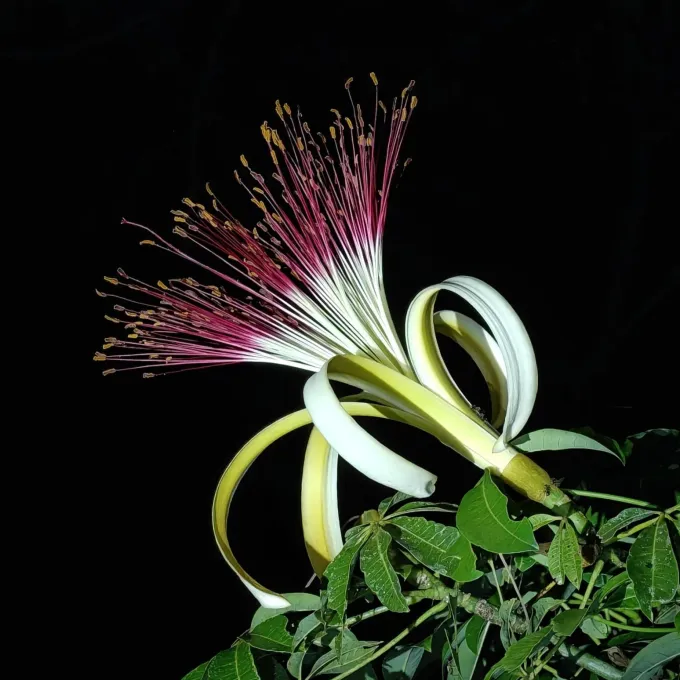
Description
Growing requirements
Pachira macrocarpa is a notable member of the Malvaceae family, native to the swampy regions of Central and South America. This tropical plant thrives in conditions that mimic its natural habitat, requiring stable warmth and high atmospheric humidity.
Successful cultivation depends on providing bright, filtered light. While the plant can tolerate lower light levels, growth rates significantly decrease, and the aesthetic structure may become leggy if the lighting is insufficient for the plant's needs.
Thermal requirements dictate a consistent range between 20°C and 25°C. Exposure to sudden temperature drops or freezing conditions is detrimental, as the plant lacks cold-hardiness and will quickly show signs of stress, including leaf abscission.
The substrate must be well-draining, loose, and fertile, with a slightly acidic pH. Incorporating organic matter such as peat or coco coir along with coarse perlite ensures adequate aeration, preventing the roots from suffocating in compacted soil.
Watering practices should be methodical, emphasizing the "soak and dry" method. It is essential to ensure that the soil is never waterlogged, as Pachira macrocarpa is highly susceptible to root rot in anaerobic conditions.
Main diseases and pests
The primary agronomic threats include fungal pathogens such as Pythium and Phytophthora, which typically manifest when moisture management is inadequate. These diseases attack the root system and can be fatal if not addressed immediately.
Pests such as spider mites, mealybugs, and scale insects frequently infest these plants, particularly in environments with low humidity and poor ventilation. They damage foliage and weaken the plant's physiological defenses.
Integrated pest management involves monitoring for early signs of infestation, such as webbing or sticky residue. Using horticultural oils or systemic insecticides is the standard procedure for eradicating these pests effectively.
Preventive care requires maintaining proper spacing between plants to allow for airflow, which significantly reduces the risk of fungal spread. Regular inspections of the undersides of leaves are crucial for early detection.
If disease symptoms appear, removing the affected tissues is the first step in control. Subsequently, applying appropriate fungicides or bactericides helps stabilize the health of the plant and prevents further contamination of the greenhouse environment.