
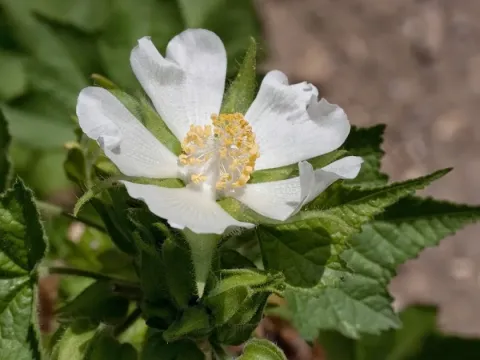
Kitaibelia
Kitaibelia
The sowing of Kitaibelia seeds is best performed in late autumn, directly into the soil, to allow for natural stratification during the winter months.
What the section contains

Kitaibelia
If spring sowing is preferred, seeds must be subjected to a cold treatment for 30–60 days to break dormancy and ensure a higher germination rate.
Sow seeds at a depth of 1–2 centimeters, ensuring they have sufficient contact with moist soil to facilitate the germination process.
Once seedlings emerge, thinning is required to maintain a spacing of at least 50–60 centimeters, which allows each plant to develop a strong root system.
The plant exhibits vigorous growth, and under optimal moisture and temperature conditions, seeds typically sprout within two to three weeks.
Kitaibelia is a member of the Malvaceae family, native to the Balkan Peninsula, known for its significant height and lush foliage.
The crop requires sunny, sheltered locations, as its tall stalks are susceptible to damage from strong winds and heavy rain events.
Well-drained, fertile soil with a neutral to slightly alkaline pH is essential for the healthy development of this perennial plant.
While moderately hardy, the plant benefits from a light layer of mulch around the base during harsh, snowless winters to protect the root zone.
Regular irrigation is vital during the growing season, particularly when the flower buds are forming, to maintain vigorous growth and abundant blooms.
The primary threats to Kitaibelia are fungal infections, including rust and various leaf spot pathogens that thrive in overly damp conditions.
To mitigate the risk of disease, gardeners should ensure adequate spacing between plants to promote proper air circulation and leaf drying.
Pests such as spider mites and aphids are known to feed on the foliage, which can weaken the plant and reduce its aesthetic appeal.
Management strategies include the timely application of appropriate insecticides or organic treatments at the first sign of infestation.
Sanitation is key; removing dead plant debris at the end of the season prevents overwintering of pathogens and harmful insect populations.
Kitaibelia is primarily cultivated as an ornamental plant in landscaping due to its impressive height and persistent, attractive flowering period.
Seed collection should take place in late summer or early autumn when the seed pods begin to dry and turn brownish in color.
Collected pods should be finished drying in a well-ventilated, dry environment to prevent mold and preserve the viability of the seeds for future use.
For floral arrangements, flower stalks are harvested when the buds are half-open, significantly extending the vase life of the cut stems.
At the end of the season, prune the aerial parts of the plant near the ground, leaving small stubs to protect the crown throughout the winter dormancy.