
Kosteletzkya buettneri
Kosteletzkya buettneri
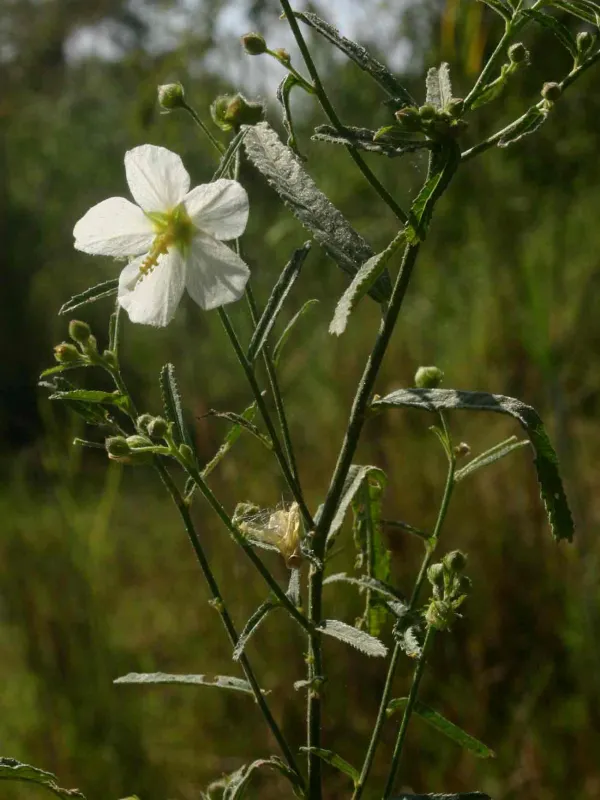
Description
Sowing dates
Kosteletzkya buettneri seeds have a hard seed coat, which necessitates pre-sowing scarification to ensure uniform germination and successful crop establishment.
The optimal planting time occurs when the soil temperature reaches 15-18°C, which usually aligns with late spring, ensuring protection against late frosts.
Rows should be spaced between 45 and 60 cm apart to facilitate machine cultivation and ensure that plants have enough space for healthy vegetative development.
Seeds should be sown at a depth of 2-4 cm; shallower sowing on heavier soils or deeper on light, sandy soils helps maintain consistent moisture levels.
Compacting the soil after planting is essential to ensure good contact between seeds and the soil, which significantly improves the germination rate.
Growing requirements
As a member of the Malvaceae family, this crop is heat-loving and requires a long growing season to reach full maturity and maximize biomass production.
It performs best in fertile, well-draining loamy or alluvial soils with a pH ranging from 6.0 to 7.5, reflecting its preference for balanced nutrient conditions.
While Kosteletzkya buettneri demonstrates good drought tolerance once established, it requires consistent moisture during the rapid stem elongation phase.
High solar radiation is crucial for the development of this plant, as shading can lead to thin, weak stems and significantly reduced total crop yield.
The plant responds favorably to nitrogen-based fertilization programs, which are vital during the first half of the growing season to promote rapid growth.
Yield
Under optimal growing conditions, the biomass yield of Kosteletzkya buettneri can reach 10 to 15 metric tons per hectare, making it a viable industrial resource.
The technical fiber content derived from the dried stems accounts for approximately 15-20% of the total dry matter, serving various textile and pulp industries.
Seed yields, prized for their high oil content, typically range from 1.5 to 2.5 tons per hectare, depending on local environmental factors and crop care.
Managing weed density during the early growth stages is critical to preventing competition that would otherwise significantly suppress the final harvest volume.
Strategic harvesting timing and moisture control after harvest are key factors in maintaining both the quality of the fiber and the viability of the seeds.
Main diseases and pests
Fungal diseases, including root rots and various leaf spots, pose the greatest threat, particularly during seasons characterized by excessive rainfall or humidity.
Pests such as aphids and spider mites can cause significant damage during hot and dry spells, often requiring vigilant monitoring and integrated management.
Proper crop rotation practices, avoiding planting on the same site for at least three to four years, are essential for reducing the risk of soil-borne pathogens.
Maintaining adequate plant spacing is a mechanical defense against disease, as it allows for better air circulation and reduces moisture buildup on the foliage.
Chemical control measures should be applied according to local agricultural standards to ensure that the fiber remains suitable for its intended industrial use.
Harvesting
For fiber production, harvest should take place during the peak flowering stage before the stems become too woody, ensuring the flexibility of the raw material.
Seed harvesting is conducted when the capsules turn brown and the seeds reach physiological maturity, indicating they are ready for mechanical extraction.
Machinery settings, specifically the threshing drum speed, must be calibrated carefully to prevent mechanical damage to the seeds during the harvest process.
The harvested material must be dried effectively, either in windrows in the field or in storage facilities, to prevent degradation and moisture-related damage.
Post-harvest conditioning includes cleaning the seeds from debris and lowering moisture content to approximately 10-12% for safe long-term storage.