
Robinson's cotton
Gossypium robinsonii
Robinson's cotton (Gossypium robinsonii) is a perennial shrub belonging to the Malvaceae family. It is a wild relative of cultivated cotton, specifically adapted to the arid and harsh climatic conditions of the Pilbara region in Western Australia.
What the section contains
Robinson's cotton
The plant is found primarily in rocky environments, steep hillsides, and ephemeral watercourses. Unlike commercial cotton, it does not require fertile agricultural soils and thrives in poor, stony substrates that provide excellent drainage, preventing root rot during rare rain events.
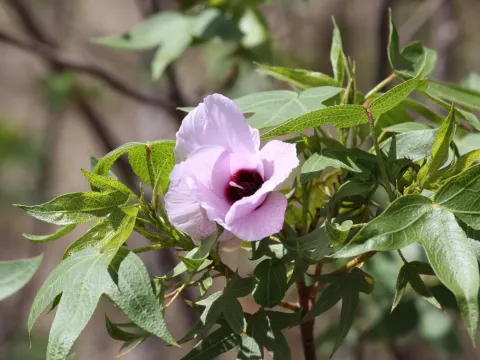
Botanically, this species is noted for its ability to withstand extreme heat and prolonged droughts. It features distinct foliage and attractive flowers that display the characteristic beauty of the Gossypium genus, growing into large, woody, and resilient shrubs.
The climatic requirements for this species are specific: it demands high solar radiation and low atmospheric humidity. High humidity levels are often detrimental to the plant, as it has evolved specifically for desert ecosystems where water scarcity is the primary limiting factor.
Economically, Robinson's cotton is recognized as a vital genetic resource. Researchers utilize this species to identify genes responsible for drought tolerance and resistance to desert pests, aiming to improve modern industrial cotton varieties through sophisticated cross-breeding techniques.
The primary threats to Gossypium robinsonii include habitat degradation and competition from invasive species that alter the local water balance. Additionally, native insects and herbivores can impact foliage development, though the species is generally resilient due to its natural evolutionary defenses.