
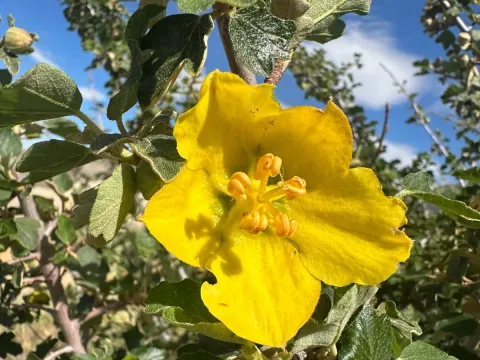
Fremontodendron
Fremontodendron
Fremontodendron, commonly known as the flannel bush, belongs to the Malvaceae family. Native to the chaparral regions of California and Mexico, this shrub is renowned for its exceptional tolerance to arid conditions and its spectacular, bright yellow flowering display during the spring.
What the section contains


Fremontodendron
Botanically, it is an evergreen shrub characterized by large, lobed leaves covered in fine, star-shaped hairs. These hairs can cause irritation to human skin, so protective gear is recommended during pruning and maintenance tasks to avoid contact with the foliage.
For successful cultivation, excellent drainage is the absolute priority. Fremontodendron thrives in poor, rocky, or sandy soils and will quickly succumb to root rot if planted in heavy clay soils or areas where water collects during the winter months.
The plant requires full sun exposure to flourish and maintain its structural integrity. It is adapted to Mediterranean climates and prefers long, dry summers followed by mild winters, making it an ideal candidate for low-water or xeriscape gardening projects.
Regarding its agricultural maintenance, minimal intervention is preferred. Once the plant is established, it rarely requires supplemental irrigation or fertilizer, as rich, nutrient-heavy soils often result in rapid, brittle growth that is susceptible to wind damage.
The most significant threat to Fremontodendron is root rot caused by Phytophthora species. This disease is directly linked to soil moisture levels; therefore, preventing water accumulation around the crown is the primary management strategy for growers.
Pests are generally a secondary concern but may include aphids and scale insects. These pests are usually managed through integrated pest management (IPM) techniques, ensuring that the plant's natural vigor is not compromised by excessive chemical applications that could harm beneficial insects.