
California flannelbush
Fremontodendron californicum
Description
Growing requirements
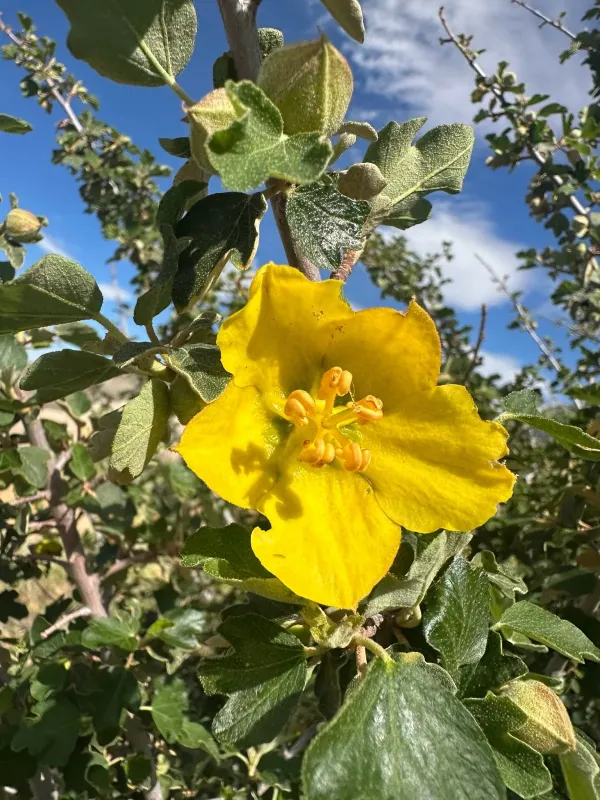
California flannelbush (Fremontodendron californicum) is a robust evergreen shrub within the Malvaceae family. It is widely recognized for its vibrant, cup-shaped yellow flowers that provide a spectacular display during the spring and early summer months.
Native to the dry, rocky slopes of California and Arizona, this plant has evolved to thrive in arid conditions. It is a classic example of Mediterranean-climate vegetation, requiring high levels of solar exposure throughout the year.
The primary requirement for successful cultivation is exceptional soil drainage. The plant is extremely sensitive to waterlogged conditions, which can lead to rapid root decay; therefore, rocky or sandy soil substrates are highly recommended.
In terms of climate, the species prefers warm temperatures and is well-adapted to prolonged dry spells. While it can handle light frosts, it is not suitable for regions with prolonged, damp, and cold winter conditions.
Cultural practices are minimal, as the shrub is adapted to nutrient-poor soils. Once established, supplemental watering should be avoided or restricted to extreme drought to prevent the development of root-related issues.
Main diseases and pests
Root rot is the most significant threat to Fremontodendron. It is frequently caused by over-irrigation or planting in poorly drained soil, which prevents the roots from accessing necessary oxygen.
The foliage of the plant is covered in fine, star-shaped hairs. These hairs can cause skin and respiratory irritation, necessitating the use of gloves and protective gear during maintenance and pruning activities.
Pests such as aphids may infest the succulent new growth during the spring. Monitoring is essential to ensure that the plant maintains its vigor and is not weakened by pest-induced stress.
Powdery mildew can occur in areas with poor airflow or humidity. Placing the shrub in a well-ventilated spot is the best preventative measure against this fungal disease.
Proper pruning is required to maintain the structural integrity of the plant. Avoid heavy pruning into old wood, as the plant has a limited capacity to recover from significant damage to mature stems.