
Fremontodendron napense
Fremontodendron napense
Description
Growing requirements
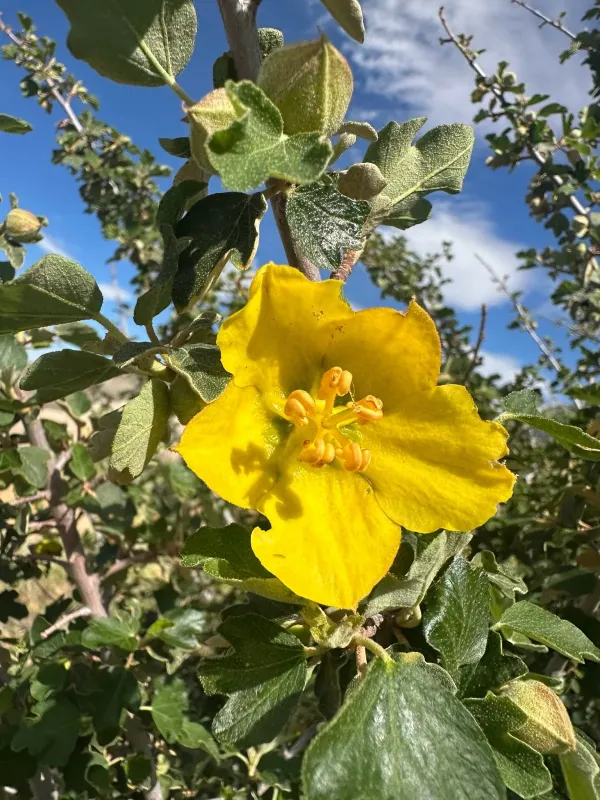
Fremontodendron napense is a distinctive evergreen shrub belonging to the Malvaceae family. It is recognized for its spectacular yellow, cup-shaped flowers that appear during the spring and summer seasons.
Native to specific regions in California, this species thrives in climates characterized by long, dry summers and mild winters. It requires full sunlight exposure to maintain its dense foliage and healthy flowering cycle.
The soil structure must be exceptionally well-drained, such as sandy loam or rocky substrates. Poor drainage is the primary cause of failure in cultivation, as the roots are highly susceptible to rot.
Fremontodendron napense is considered a drought-tolerant plant once established. In an agricultural setting, irrigation should be carefully managed to avoid direct wetting of the root crown, especially in humid conditions.
This shrub requires minimal pruning. Maintenance should focus on removing dead or diseased branches to improve air circulation within the canopy, which helps in preventing fungal issues.
Main diseases and pests
Root rot, particularly caused by Phytophthora species, is the most significant threat to the plant's viability. This disease typically arises in waterlogged soil conditions.
Fungal infections can spread rapidly if the air circulation around the shrub is restricted. Regular spacing and pruning help mitigate the risk of these pathogens taking hold.
Spider mites are common pests that thrive on the plant during periods of high heat and low humidity. They can cause significant foliage discolouration and overall stress.
Scale insects can also infest the stems, extracting vital sap and creating sticky secretions that attract secondary infections like sooty mold.
Effective management includes implementing a strictly controlled watering regimen and using targeted acaricides or insecticides only when active infestation symptoms are observed.