
Adansonia fony
Adansonia fony
Description
Growing requirements
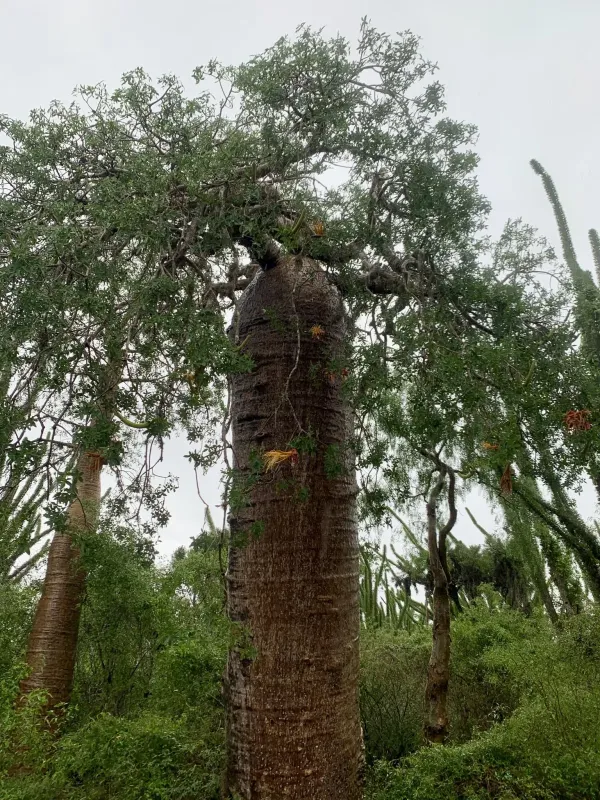
Adansonia fony, often recognized as a variety of Adansonia za, is a species of the Malvaceae family native to the arid forests of Madagascar. It is a succulent tree with a unique barrel-shaped trunk designed for water storage.
The crop thrives in tropical environments characterized by distinct wet and dry seasons. It requires full solar exposure and does not tolerate competition from other woody species or canopy cover that might shade its foliage.
Soil requirements focus on permeability and mineral composition. Adansonia fony performs best in loose, sandy-loam soils that facilitate rapid water drainage, preventing the root rot to which this species is highly susceptible.
Climatic parameters are strict; the species is frost-intolerant and requires consistent warmth throughout the year. Temperatures below 15°C will significantly retard growth and may cause irreversible tissue damage to young saplings.
Agronomic management involves carefully timed irrigation. During the peak of the growth season, deep watering is essential to support the tree's metabolic processes, but irrigation must be suspended completely during the dormant period.
Harvesting
The economic value of Adansonia fony lies primarily in its fruit production. The pods are harvested once they have matured and dried on the branch, ensuring the seeds within have reached their full nutrient capacity.
The pulp of the fruit is a significant source of vitamins and minerals. It is traditionally processed into powders or extracts that serve as functional food ingredients, contributing to the global demand for superfruits.
Seed oil extraction is another growing segment of the industry. The oil derived from the seeds is rich in essential fatty acids, making it a valuable additive for skin care formulations and artisanal soap production.
Fiber harvesting from the inner bark remains a traditional practice. The fibers are used to create durable cords and fabrics, showcasing the tree's utility as a multi-purpose resource in agroforestry systems.
Sustainable harvesting is crucial for maintaining wild populations. Field managers prioritize selective harvesting techniques to prevent damage to the tree's structure, ensuring the longevity of productive individuals.