
Bunchosia glandulosa
Bunchosia glanduulosa
Description
Growing requirements
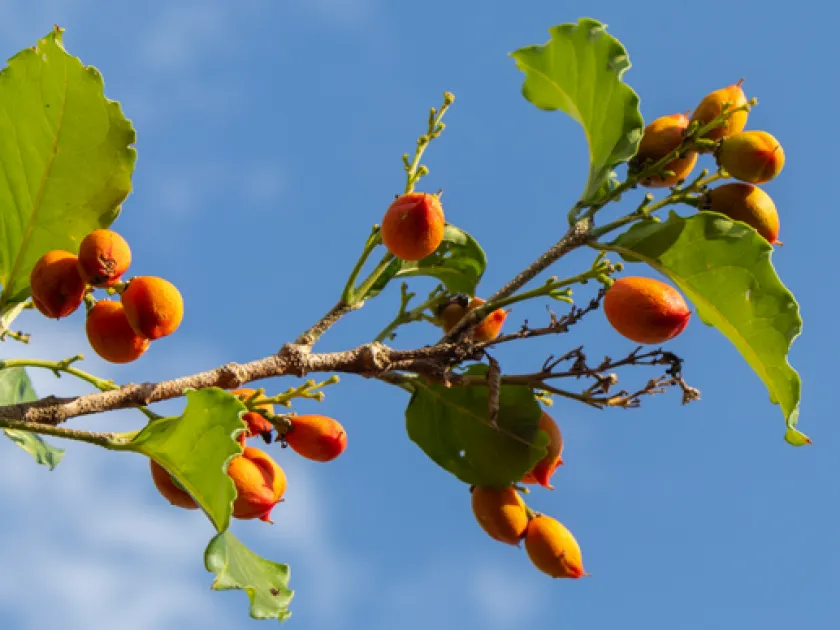
Bunchosia glandulosa, commonly known as the peanut butter fruit tree, belongs to the Malpighiaceae family. It is a small, evergreen tree native to the tropical regions of the Caribbean, Central, and South America, widely appreciated for its unique fruit characteristics.
The plant thrives in well-drained, fertile soils with a pH ranging from neutral to slightly acidic. Proper soil preparation is essential to ensure healthy root development, as the plant is susceptible to root rot if water stagnation occurs in the root zone.
Regarding climatic needs, this species requires a tropical or warm subtropical environment. It has zero tolerance for frost and performs best in locations with full sun exposure, although it can tolerate partial shade during the hottest parts of the day.
Botanically, it features attractive, glossy leaves and small yellow flowers that appear in racemes. The plant is self-fertile, which allows for fruit production even when only one specimen is planted, making it an excellent candidate for residential tropical orchards.
The culinary utility of the fruit is significant. Its pulp has a dense, nutty, and sweet flavor profile resembling peanut butter, making it popular for smoothies, milkshakes, and artisanal jams, as well as an important source of vitamins and minerals.
Main diseases and pests
The primary pests affecting Bunchosia glandulosa include mealybugs and scale insects. These pests often cluster on the undersides of leaves and on stems, causing yellowing and stunted growth if left unmanaged.
Fungal diseases, specifically leaf spot and root rot, can pose a threat, particularly in humid climates where airflow is limited. Maintaining proper spacing and pruning the canopy is crucial for mitigating these risks effectively.
In some regions, nematodes can become problematic if the soil structure is poor or sandy. Incorporating organic matter into the soil helps to improve soil biology and provides natural defense against such subterranean threats.
Integrated Pest Management (IPM) practices, including the use of horticultural oils for soft-bodied insects, are generally effective in managing outbreaks before they impact the overall yield of the trees.
Regular monitoring of the foliage and stems allows for early detection of potential threats, ensuring the longevity and productivity of the plant throughout its life cycle.