
Erianthemum dregei
Erianthemum dregei
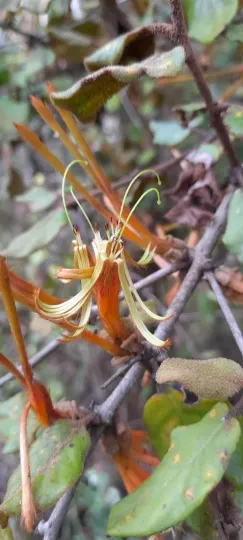
Description
Growing requirements
Erianthemum dregei is a hemiparasitic shrub belonging to the Loranthaceae family, commonly known as a type of mistletoe. It lives attached to the branches of various host trees, relying on them for essential water and mineral intake.
The plant is native to sub-Saharan Africa, with a wide range spanning from Ethiopia to South Africa. It thrives in various environments, including tropical woodlands, savannas, and cultivated orchards where host trees are abundant.
Botanically, it features leathery leaves and specialized structures called haustoria. These structures penetrate the bark of the host tree to connect with the xylem, allowing the parasite to extract nutrients directly from the host's vascular system.
Its climatic requirements are centered around the availability of suitable hosts in areas with adequate rainfall or groundwater access. As a hemiparasite, it retains chlorophyll and conducts photosynthesis, allowing it to supplement its nutrient intake.
The reproduction of this plant is ecologically dependent on avian vectors. Birds consume the fruit and spread the sticky seeds to new branches, facilitating the colonization of new host trees throughout the canopy.
Main diseases and pests
In agricultural settings, Erianthemum dregei is often viewed as a pest that affects the productivity of fruit trees, such as citrus and other broad-leaved varieties.
While a light infestation may be tolerated by a healthy host, heavy colonization leads to branch dieback, reduced fruit quality, and lower overall yields of the tree.
Management of this parasite is primarily mechanical. Pruning infected branches at an early stage of infestation is the most effective method to stop its spread and minimize physical damage to the tree.
Chemical control remains difficult because the parasite is physically integrated into the host tree, making systemic herbicides potentially harmful to the primary agricultural crop.
Good orchard management, including consistent monitoring and maintaining tree vitality, significantly reduces the probability of severe infestations by this parasitic species.