
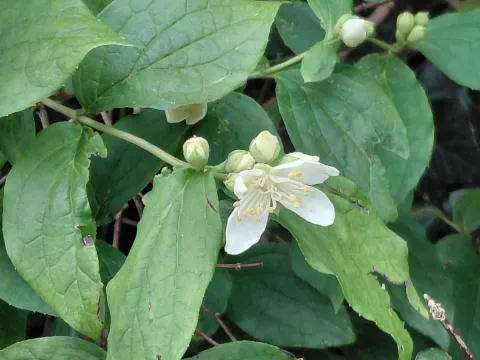
Caucasian mock-orange
Philadelphus caucasicus
Caucasian mock-orange (Philadelphus caucasicus) is a deciduous shrub belonging to the Hydrangeaceae family. Native to the Caucasus region, it is highly valued for its elegant, fragrant white flowers that bloom in early summer, creating a dramatic visual impact.
What the section contains
Caucasian mock-orange
The plant thrives in sunny locations or partial shade, provided it is protected from harsh, drying winds. It grows best in fertile, well-draining soils with a neutral or slightly acidic pH, which supports robust root development and long-term health.
Regular maintenance is essential for peak performance, including consistent watering during the growing season. While established plants are relatively hardy, mulching the soil around the base helps maintain moisture and suppresses weed growth effectively.
Pruning should be performed annually after the flowering period ends. By removing old, crossing, or damaged stems, gardeners ensure adequate airflow and sunlight penetration, which are critical for preventing disease and encouraging dense, healthy new growth.
This shrub is known for its cold tolerance and adaptability, making it a reliable choice for temperate landscape design. It serves as an excellent specimen plant, a component of mixed shrub borders, or an informal flowering hedge in various garden styles.
Common pests include aphids, which often cluster on young shoots, and spider mites that thrive in dry conditions. Integrated pest management, including the use of horticultural oils or insecticidal soaps, is highly effective for controlling these populations.
Fungal diseases like leaf spot and gray mold can affect the foliage if air circulation is poor or humidity is excessive. Maintaining proper spacing between plants and performing thorough sanitary pruning are the best preventative strategies against these pathogens.