
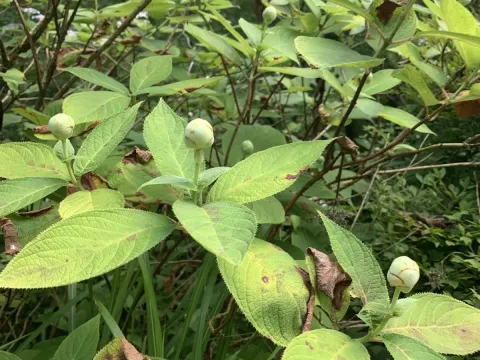
Bracted hydrangea
Hydrangea involucrata
Hydrangea involucrata, commonly known as the Bracted hydrangea, is a perennial shrub belonging to the Hydrangeaceae family. Native to the mountainous forests of Japan and Taiwan, it thrives in cool, humid, and shaded environments.
What the section contains
Bracted hydrangea
The plant is distinguished by its modest size, typically growing up to one meter, and its unique flower clusters protected by bracts. The leaves are broad and deciduous, while the stems often display a fine, soft pubescence.
Successful cultivation requires fertile, well-draining soil rich in organic matter with a slightly acidic pH. Incorporating peat moss or decomposed pine needles helps maintain the soil structure and acidity levels essential for optimal nutrient uptake.
Climate requirements include protection from harsh midday sun and strong winds. It performs best in partial shade locations where it receives filtered light throughout the day, preventing foliage scorch and dehydration.
Regular maintenance involves consistent watering, especially during dry spells. Applying a thick layer of organic mulch around the root zone is a critical agricultural practice to conserve moisture and maintain a stable soil temperature.
Common pests affecting Hydrangea involucrata include spider mites and aphids, which are particularly problematic in dry or overly warm conditions. Monitoring the undersides of leaves and applying horticultural soaps or systemic insecticides is highly recommended.
Fungal diseases such as powdery mildew and gray mold can affect the foliage if air circulation is poor or if the leaves remain wet for extended periods. Pruning for proper aeration is essential to reduce these risks.
Root rot caused by stagnant water is a significant threat to the plant's health. Ensuring that the planting site has excellent drainage is the primary defense against such soil-borne pathogens.
Chlorosis, manifesting as yellowing leaves while veins remain green, is a frequent sign of iron deficiency caused by high soil pH. Keeping the soil acidic through regular amendment applications is necessary for vibrant health.
- Regular inspection of the plant's canopy.
- Sanitary pruning of damaged or infected stems.
- Application of balanced fertilizers designed for acid-loving shrubs.