
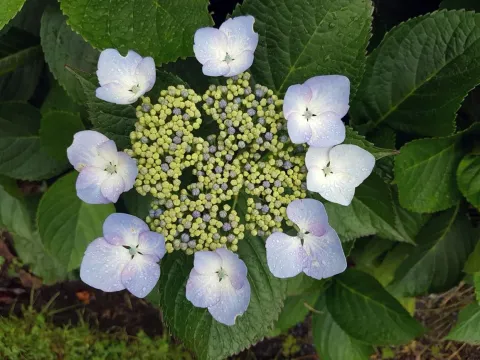
Blue Hydrangea
Hydrangea caerulea
Hydrangea caerulea belongs to the Hydrangeaceae family and is a popular ornamental shrub recognized for its spectacular blue flowers. It is widely cultivated for landscaping in temperate regions across the world.
What the section contains
Blue Hydrangea
The plant thrives in partial shade where it is protected from intense afternoon sun. Exposure to harsh sunlight can lead to scorched leaves and rapid moisture loss, which negatively affects the overall vitality of the plant.
Soil acidity is the most critical factor for the coloration of the blossoms. The blue pigment is achieved through the interaction of anthocyanins with aluminum ions, which are only available to the roots in acidic soils with a pH of 5.5 or lower.
Consistent moisture is required for healthy growth. During the growing season, the substrate should remain damp but never waterlogged, as poor drainage can cause root suffocation and subsequent decay.
Gardeners should enrich the soil with organic matter such as peat or compost to maintain structure and moisture retention. Proper site selection and soil preparation are fundamental to achieving the desired floral display each season.
Iron chlorosis is a common disorder where leaves turn yellow while the veins remain green. This is usually caused by an alkaline soil environment that prevents the plant from absorbing necessary micronutrients like iron.
Powdery mildew is a fungal disease that appears as a white, dusty layer on the leaves and stems. It thrives in high humidity and stagnant air, making regular pruning to improve airflow an essential preventive measure.
Spider mites are notorious pests for hydrangeas, especially during dry and hot weather conditions. They feed on plant sap, causing the foliage to fade, curl, and eventually drop off if left untreated.
Aphids can also cluster on the tender tips of new growth, stunting development. Early detection and the use of horticultural oils or soap sprays are generally effective in managing these infestations.
Botrytis blight may affect the flowers during damp, cool conditions. Removing dead or damaged plant debris from around the base of the shrub is a crucial sanitation step to reduce the risk of future fungal infections.