
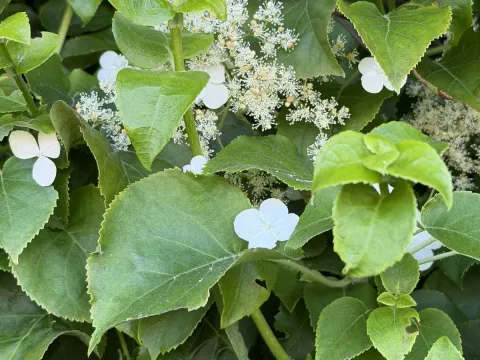
Climbing hydrangea
Hydrangea petiolaris
Climbing hydrangea (Hydrangea petiolaris) is a vigorous woody vine belonging to the Hydrangeaceae family. Native to the forests of East Asia, this plant is highly valued for its ability to climb vertical surfaces using aerial rootlets.
What the section contains
Climbing hydrangea
The culture requires rich, well-drained soil with a slightly acidic pH. It thrives in locations with partial shade or dappled sunlight, as direct afternoon sun can cause leaf scorch in drier climates.
Climate requirements include moderate moisture and protection from harsh, drying winds. While the plant is quite hardy, it prefers regions where the root system can remain cool throughout the growing season.
Cultivation practices focus on consistent irrigation. Since the plant has a shallow root system, mulching is essential to retain soil moisture and stabilize root temperatures against seasonal fluctuations.
Its primary agricultural and horticultural use is ornamental vertical landscaping. It is an excellent choice for covering north-facing walls, rock faces, and large tree trunks where other flowering climbers fail to thrive.
Climbing hydrangea is generally resistant to serious pests and diseases. However, in poorly ventilated or excessively humid conditions, powdery mildew can occur, forming a white fungal layer on foliage.
Iron chlorosis is a common issue when the soil pH is too high (alkaline). This condition causes leaves to turn yellow while the veins remain green, requiring the application of iron chelates.
Pests like aphids and spider mites can occasionally affect the plant, particularly in sheltered, dry areas of the garden. Infestations are typically managed through regular watering and insecticidal soaps.
Proper pruning is necessary to maintain the plant's health and size. It should be performed after flowering to encourage new growth and prevent the accumulation of dead wood that could harbor pests.
Maintaining a healthy, stress-free plant through correct site selection and soil management is the best defense against any potential biological threats.