
Bush anemone
Carpenteria californica
Description
Growing requirements
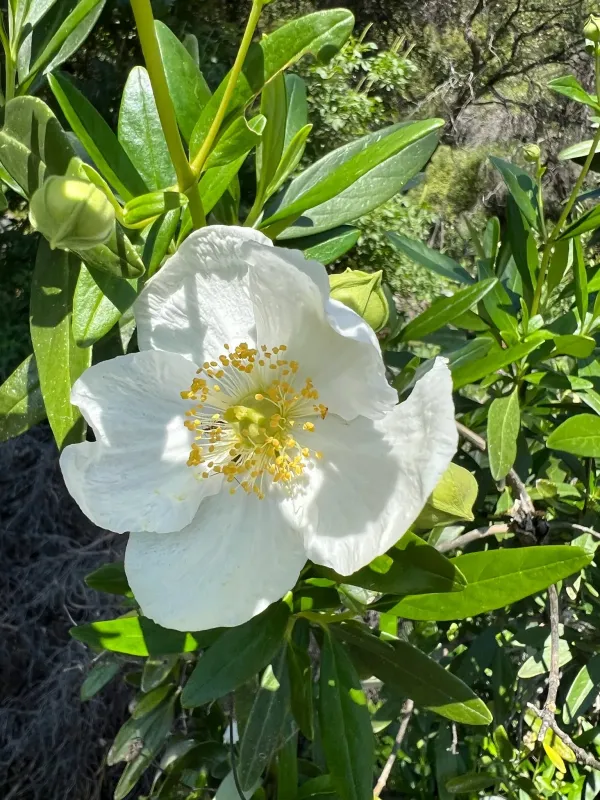
Carpenteria californica, commonly known as bush anemone, is a unique evergreen shrub belonging to the Hydrangeaceae family. Native to a very restricted area in the foothills of the Sierra Nevada, it is highly prized in horticultural circles for its stunning white, fragrant flowers and dark, glossy foliage.
The cultural requirements for this shrub focus on replicating a Mediterranean-like climate. It thrives in sunny locations with well-drained soil, preferably a loam or sandy mix that prevents any moisture from accumulating around the root system, which is vital to prevent root rot.
When establishing the plant, it is recommended to provide shelter from harsh, drying winds and strong winter frosts. While it is moderately drought-tolerant once fully established, regular irrigation during the first two growing seasons is essential for root system development.
Soil pH should ideally be neutral to slightly acidic. Incorporating organic matter into the soil at the time of planting enhances nutrient availability and structure, promoting vigorous growth during the spring flowering season.
Maintenance includes light pruning immediately after the flowering period to remove spent blooms and shape the shrub. This practice encourages denser branching and prepares the plant for the following season's growth cycle, ensuring the shrub remains an attractive focal point.
Main diseases and pests
The primary threats to Carpenteria californica are fungal pathogens triggered by poor drainage or high humidity, which can lead to crown and root rot, often proving fatal if left unchecked.
Leaf spot diseases may occur in stagnant, damp air conditions, highlighting the importance of proper spacing and annual thinning of the inner canopy to maintain good airflow.
Common insect pests include scale insects and mealybugs, which tend to infest the stems and undersides of leaves, draining sap and hindering the overall vigor of the plant.
In hot and dry climates, spider mites can become an issue, particularly during late summer when the plant might be under water stress, leading to discoloration and premature leaf drop.
Effective management strategies should focus on preventative care, such as balanced irrigation and sanitary pruning, rather than relying solely on chemical intervention to manage potential pest outbreaks.