
Chinese Decumaria
Decumaria sinensis
Decumaria sinensis, commonly known as Chinese Decumaria, is a climbing vine species belonging to the Hydrangeaceae family. Native to the woodlands of China, this plant has adapted to shaded environments where it utilizes its adhesive aerial roots to climb trees and rock faces in its natural habitat.
What the section contains
Chinese Decumaria
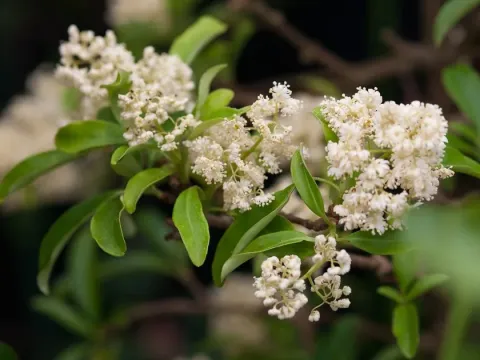
The botanical structure of the plant features evergreen, leathery, elliptic leaves and small, fragrant white flowers arranged in corymbs. The foliage provides a lush, deep green backdrop, making the plant visually appealing even when it is not in the flowering stage during the late spring and early summer months.
Cultivation requirements include a preference for moist, well-draining, and acidic soil types. Regular irrigation is essential for maintaining plant health, especially during periods of drought, as the roots are sensitive to both prolonged saturation and extreme dehydration, necessitating a balanced moisture regime.
Regarding climate, the plant thrives in moderate environments. It generally requires protection from harsh winter winds and temperatures below its frost tolerance limit (typically USDA zone 7). Providing a sheltered location near a wall or fence can help mitigate environmental stress and promote faster growth rates.
The primary horticultural use of Decumaria sinensis is vertical landscaping. It is highly valued for covering brick walls, stone pillars, and arbors. Because of its relatively slow establishment compared to other vigorous vines, it is often favored for controlled, refined garden designs where architectural precision is required.
Common plant health issues include root rot caused by poor soil drainage and waterlogging. Gardeners should ensure that the planting site provides efficient water runoff and use organic mulch to prevent direct contact between the soil and the plant's basal stems to avoid fungal pathogens.
Insect pests, including aphids and spider mites, can occasionally affect the vine, particularly in greenhouse conditions or during hot, dry spells. Effective pest control measures include maintaining optimal plant vigor through fertilization and using horticultural oils or soaps at the first sign of an infestation.