
Variable-leaf watermilfoil
Myriophyllum heterophyllum
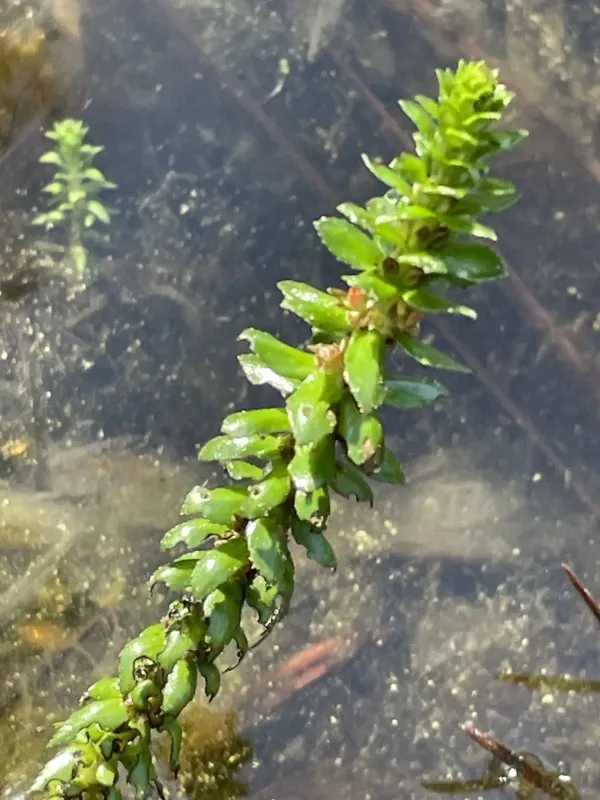
Description
Growing requirements
Variable-leaf watermilfoil (Myriophyllum heterophyllum) is a perennial aquatic plant belonging to the Haloragaceae family. It is native to North America and typically thrives in still or slow-moving freshwater environments such as lakes and ponds.
The plant is defined by its characteristic heterophylly, possessing finely dissected submerged leaves and more rigid, serrated aerial leaves. This structural versatility allows it to adapt to various water depths and current speeds within its habitat.
Cultivation requires stable water temperatures between 15°C and 25°C and a nutrient-rich substrate. Adequate sunlight exposure is critical, as photosynthesis is the primary driver of its rapid biomass accumulation during the growing season.
In managed systems, this species is often utilized for its ability to filter water. It serves as a biological agent for nutrient uptake, effectively sequestering phosphates and nitrates, which helps in preventing excessive algae growth in small-scale aquaculture setups.
Due to its invasive potential, it is essential to manage Myriophyllum heterophyllum within contained systems. Overgrowth can disrupt local ecosystems and hinder human-made aquatic infrastructure, requiring regular maintenance and biomass harvesting protocols.
Main diseases and pests
Typical threats include various weevil species and aquatic insects that consume the plant's succulent stems. High infestation rates can lead to significant biomass reduction, particularly in stagnant waters where plants are already under nutritional stress.
Fungal pathogens can also impact the health of the colonies, particularly in environments with poor water quality. These infections often present as lesions on the stems or leaf decay, necessitating water quality monitoring to ensure the plants remain vigorous.