
Blue pincushion
Brunonia australis
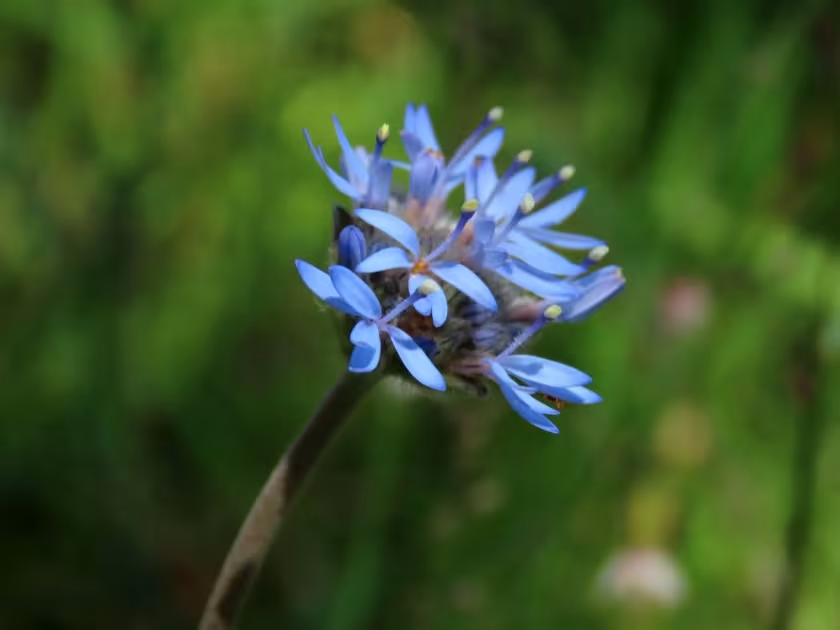
Description
Sowing dates
Sowing seeds of Brunonia australis should ideally be performed in spring once the danger of frost has passed. The seeds require stable temperatures between +18°C and +22°C to ensure successful germination and early development.
In warmer regions, direct sowing in open garden beds with plenty of sunlight is standard practice. For cooler climates, starting seeds in containers indoors allows for better protection of vulnerable seedlings from erratic weather.
The seeds require light to germinate, so they should be sown on the surface and barely covered with a fine layer of substrate. Excessive depth when sowing often leads to poor germination rates or complete seed failure.
Maintaining consistent moisture is critical during the initial germination phase. However, care must be taken not to overwater, as saturated soil can quickly cause seed rot before emergence occurs.
Once seedlings develop their first true leaves, thinning is recommended to provide sufficient space for growth. Proper spacing ensures each plant develops a strong, healthy root system and a lush rosette of foliage.
Growing requirements
Brunonia australis, a member of the Goodeniaceae family, is native to Australia. It has evolved to thrive in nutrient-poor environments, typically favoring sandy or rocky soils that provide excellent drainage.
The plant is naturally drought-tolerant, featuring pubescent leaves that help minimize water loss. To achieve optimal performance, the species requires full sun exposure throughout the day.
The soil must have superior drainage properties as the roots are highly sensitive to waterlogging. Heavy clay soils are generally unsuitable unless extensively amended to improve aeration and drainage.
This species prefers a temperate climate with low air humidity. High humidity coupled with intense heat can be detrimental, often leading to physiological stress and reduced floral displays.
Fertilization is rarely necessary for this species. Excess nitrogen often promotes excessive vegetative growth at the expense of flowering, so cultivation in poorer, well-draining soils is usually the preferred horticultural approach.
Main diseases and pests
Fungal infections caused by excessive moisture are the primary threat to this plant. Root rot is a common issue that occurs when the substrate remains wet for too long or lacks proper air circulation.
Powdery mildew can be a problem in poorly ventilated greenhouse conditions. To prevent this, it is essential to ensure adequate spacing between individual plants and maintain a consistent airflow around the foliage.
Slugs and snails are the most common pests, as they are attracted to the young foliage of the plant. Using physical barriers or bait is often necessary to prevent significant damage to the plant's rosettes.
Aphids can occasionally attack the buds and tender stems, feeding on plant sap. Early detection and the application of mild, organic insecticides or soapy water are effective measures for management.
Maintaining good plant hygiene by removing dead or decaying leaves is vital for preventing the spread of disease. A clean surrounding environment significantly reduces the risk of pathogens establishing themselves.