
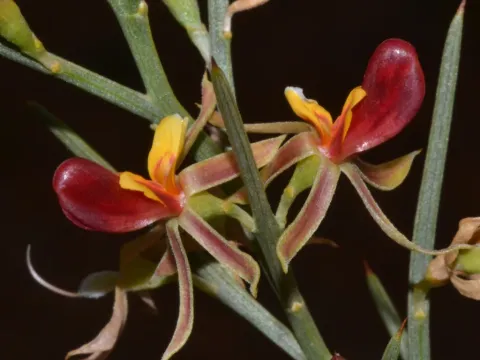
Jacksonia
Jacksonia
Jacksonia is a genus of flowering plants in the pea family, Fabaceae. It is a diverse group of shrubs and small trees native to Australia, uniquely adapted to survive in some of the most arid and nutrient-poor environments on the continent.
What the section contains

Jacksonia
The most distinctive botanical feature of Jacksonia is the replacement of true leaves with phyllodes or cladodes—flattened, photosynthetic stems. This evolutionary adaptation significantly reduces water transpiration, allowing the plant to thrive under intense heat.
Agricultural success with Jacksonia depends heavily on soil composition. It requires exceptionally well-draining, sandy, or stony substrates. Heavy soils that retain moisture are generally unsuitable as they promote root rot and rapid decline.
Climate requirements include high solar radiation and low atmospheric humidity. While they are resilient to drought, they require consistent environmental conditions to establish a healthy root system during the initial growth stages of development.
Cultural management implies minimal intervention. Due to their native habitat, these plants do not require high levels of nitrogen or phosphorus. Over-fertilization is counter-productive and often results in unhealthy, succulent growth that is prone to pests.
Root rot, primarily caused by Phytophthora species, is the most lethal threat to Jacksonia. It occurs almost exclusively in saturated soil conditions, making the drainage system the primary defense strategy for any farmer or grower.
Insect pests such as scale insects and aphids may occasionally infest the stems. Because the stems are the primary photosynthetic organs, damage to the epidermis can be detrimental to the plant's overall vigor and metabolic capacity.
Fungal infections, including mildews, can occur during uncharacteristically humid seasons. Managing air circulation through proper planting spacing and selecting well-ventilated areas are essential preventative measures against such outbreaks.
Soil-borne nematodes are another potential risk in sandy soils. Integrated pest management, such as the use of organic amendments and crop rotation where possible, helps mitigate the impact of these microscopic pests on the root system.
Regular monitoring of the cladodes for color changes or wilting is recommended. Proactive maintenance, including the removal of dead or decaying material, keeps the plant environment clean and minimizes the risk of pathogen spread.