
Japanese Bird of Paradise
Caesalpinia japonica
Description
Growing requirements
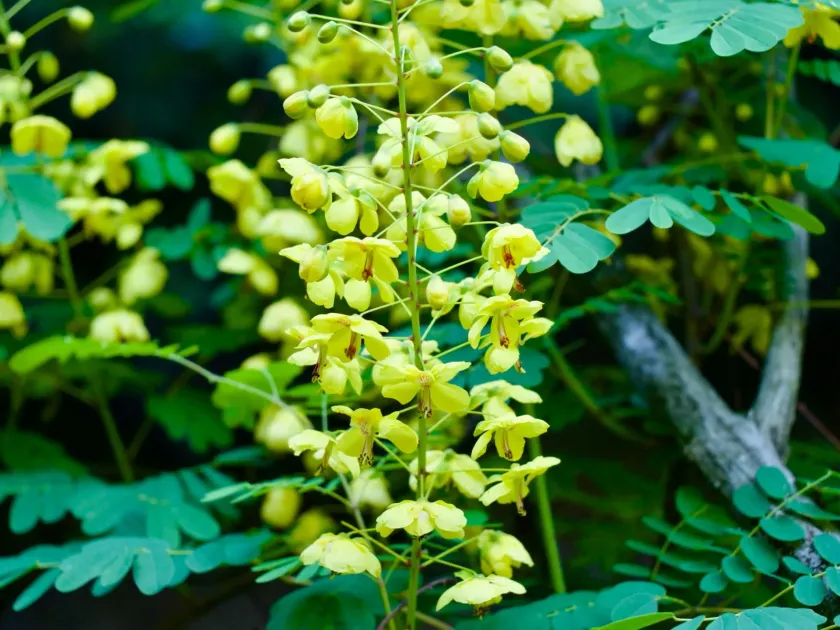
Caesalpinia japonica, commonly known as the Japanese Bird of Paradise, is a deciduous shrub belonging to the Fabaceae family. It is prized for its elegant pinnate foliage and striking bright yellow flowers that feature long, decorative stamens.
Native to East Asia, specifically Japan and China, this plant thrives in warm, temperate climates. Its architectural form makes it a sought-after specimen for landscaping and ornamental garden design in regions that support its growth.
The plant demands a sunny, sheltered location to reach its full potential. Soil requirements include well-drained, fertile ground with a neutral to slightly acidic pH, as poor drainage is the primary cause of root-related complications in this species.
Climate adaptability is a key consideration for growers. While it can handle mild winters, it is sensitive to severe frost. In colder regions, it is frequently managed as a container plant, requiring winter protection in a greenhouse or conservatory.
Agronomic practices center on balanced spring fertilization and consistent irrigation during the peak growing season. Regular pruning is necessary to maintain shape, improve airflow through the canopy, and stimulate vigorous new growth for the next season.
Harvesting
The primary use of Caesalpinia japonica is strictly ornamental, serving as a focal point in landscape architecture or as part of exotic shrub borders. Its ability to create a tropical atmosphere in temperate zones is highly valued.
Propagation is generally achieved through seeds or semi-hardwood cuttings. Seeds have a hard seed coat and benefit from scarification to improve germination rates, ensuring a more uniform development of seedlings in the nursery.
The flowering phase occurs during mid-summer, transforming the shrub into a vibrant feature. Following pollination, flattened seed pods develop, which darken upon maturity as the plant prepares for its dormant phase.
Harvesting seeds involves waiting until the pods turn dry and brittle. Collectors should store the seeds in a dry, cool environment to maintain viability for the following planting season, ensuring proper labels are used for variety tracking.
Care must be taken during maintenance activities, as the branches are often equipped with small, sharp thorns. Proper gardening equipment and protective clothing are recommended when performing pruning or structural thinning of the shrub.