
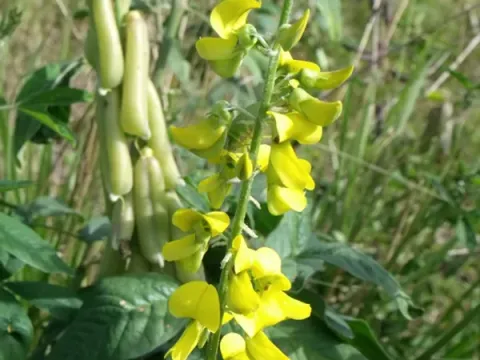
Sesbania rostrata
Sesbania rostrata
Sesbania rostrata is a tropical annual legume widely recognized for its exceptional nitrogen-fixing capabilities. Belonging to the Fabaceae family, it is highly valued in agriculture as a potent green manure crop capable of revitalizing depleted soils.
What the section contains
Sesbania rostrata
Native to West Africa, this plant has evolved to thrive in wetland environments. Its ability to grow in waterlogged soils makes it a staple for rice-growing regions where other legumes would fail due to root rot caused by stagnant water.
Botanically, it is characterized by its tall, sturdy stems that can reach heights of up to 3 meters. A unique feature is the presence of nitrogen-fixing nodules on both the roots and the stems, allowing for high levels of atmospheric nitrogen fixation.
The primary use of this crop is to increase soil organic matter and nitrogen availability. After a short growth period, the biomass is typically incorporated into the soil, providing immediate nutrients for subsequent food crops.
Beyond soil enrichment, Sesbania rostrata is utilized for erosion control in tropical areas. Its fast growth rate ensures rapid ground coverage, which protects the soil surface from the destructive forces of heavy rains.
This crop is strictly adapted to tropical climates and requires high temperatures to thrive. The ideal thermal range for growth is between 25 and 35 degrees Celsius, as even light frost can be lethal to the plant.
Water availability is essential for this plant, which excels in saturated or flooded conditions. Unlike most legumes that require well-drained soils, Sesbania rostrata actively benefits from high soil moisture content.
Full exposure to sunlight is required to maximize biomass production. Shading significantly impairs the plant’s photosynthetic efficiency and reduces its effectiveness as a nitrogen-fixing green manure.
The plant is versatile regarding soil types, performing well in clay, saline, or acidic environments. It is often used to reclaim abandoned or marginalized agricultural lands where the soil structure has been severely compromised.
While it is relatively resilient, ensuring consistent moisture during the germination phase is critical for establishing a dense and uniform stand that will maximize the green manure output.
Fungal diseases are the most common issue, particularly in high-humidity climates where air circulation within the canopy is restricted. Proper sowing density is essential to prevent these outbreaks.
Various chewing insects and leaf-eating caterpillars can cause significant damage to young plants. Regular scouting of the field is necessary to implement control measures before the foliage is extensively stripped.
Crop rotation is the most effective defense against soil-borne pathogens. Avoiding the planting of Sesbania rostrata in fields recently used for other legume crops helps reduce the incidence of shared plant diseases.
Root-knot nematodes can compromise the plant’s ability to fix nitrogen effectively. Utilizing healthy seeds and monitoring plant vigor during the early stages of growth is recommended to ensure strong root health.
Management of the crop must be proactive rather than reactive. By maintaining good agricultural hygiene, such as removing debris and avoiding over-irrigation in stagnant spots, farmers can mitigate most risks associated with pests and diseases.