
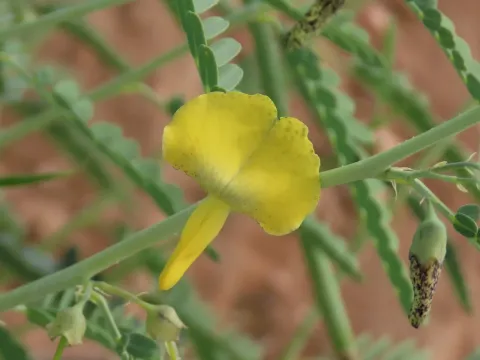
Sesbania pachycarpa
Sesbania pachycarpa
Sesbania pachycarpa is a heat-loving tropical crop, so its sowing time depends on the period of sustained soil warming. The optimal time for seeding occurs when the topsoil temperature reaches 18–20 degrees Celsius.
What the section contains
Sesbania pachycarpa
In climates suitable for its growth, planting is conducted after the risk of late spring frosts has passed. Early sowing allows the crop to maximize the use of moisture following the rainy season or irrigation for rapid vegetative mass development.
Sowing depth is typically 2–3 centimeters. When planting in arid regions, it is essential to ensure tight seed-to-soil contact to promote uniform swelling and germination of the seeds.
Seeding rates depend on the purpose of cultivation, whether for green manure biomass or seed production. Denser planting encourages the formation of thinner stems, which is preferred for higher quality decomposition of biomass.
Sesbania is characterized by fast initial growth, which allows it to suppress weed vegetation effectively. Timely sowing provides the crop with a competitive advantage over weeds during critical stages of development.
Sesbania pachycarpa belongs to the Fabaceae family and is valued as an efficient nitrogen fixer. It develops best in hot and humid tropical climates, demonstrating high tolerance to short-term soil waterlogging.
The crop is quite plastic regarding soil conditions, though it prefers fertile loamy soils with good moisture retention. It successfully adapts to heavy clay soils where other legumes might suffer from poor root aeration.
An important requirement is sufficient insolation, as the plant is highly photophilous. Prolonged shading leads to elongated stems and a significant decrease in overall biomass productivity.
The plant possesses a well-developed root system capable of penetrating deep into soil layers. This allows Sesbania to effectively extract nutrients and survive periods of moderate drought once established.
For optimal nitrogen fixation, it is recommended to inoculate seeds with specific strains of rhizobia before sowing. This significantly increases nitrogen content in the biomass and enhances soil fertility after the crop is incorporated.
The yield of Sesbania pachycarpa depends directly on the level of agrotechnics and moisture availability. Under favorable conditions, it is capable of producing a significant volume of green mass in a short growing season.
The green mass of this crop is rich in nitrogen, making it one of the best choices for green manure. With proper biomass management, farmers achieve a significant yield increase for subsequent crops in the rotation.
Besides green biomass, the plant is capable of providing high seed yields. Seed plots require moisture control during the pod-filling stage to ensure full maturation of the thick-fruited pods.
Economic use includes applying the crop as a feed supplement that contains a high percentage of protein. However, it is necessary to monitor the developmental stage, as hardening of the stems reduces palatability for livestock.
Biomass yield often reaches high levels, ensuring the accumulation of 150–200 kg of nitrogen per hectare. This makes Sesbania an economically profitable tool for restoring soil fertility in tropical zones.
Sesbania pachycarpa possesses natural resistance to many diseases typical of legumes. However, under high humidity conditions, infection by fungal pathogens causing leaf spot is possible.
The main pests of the crop are various species of insects that damage the leaf apparatus. Caterpillars of leaf-eating moths can cause significant damage to crops during mass outbreaks.
Harmful nematodes can also infest the root system of the plant, especially during continuous cropping on the same plot. Crop rotation is an essential requirement for preventing the accumulation of soil-borne pathogens.
For crop protection, the use of biological pest control methods is recommended. Chemical treatments are applied only if the economic threshold of damage is exceeded to preserve beneficial entomofauna.
- Regular monitoring of seedling health.
- Maintaining optimal planting density for airflow.
- Use of resistant cultivar populations.
- Timely management of weed reservoirs for infections.