
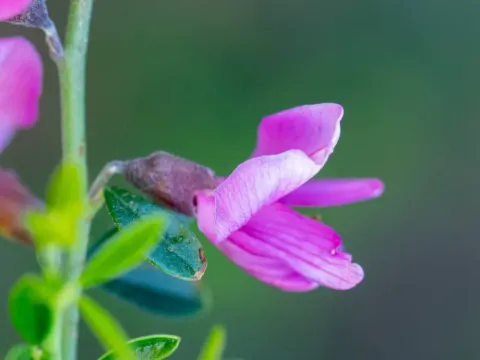
Pickeringia
Pickeringia
Pickeringia (Pickeringia montana) is a monotypic genus of evergreen shrubs belonging to the Fabaceae family. It is native to the chaparral regions of California, perfectly adapted to a Mediterranean-type climate with wet winters and hot, dry summers.
What the section contains

Pickeringia
Botanically, this shrub is recognized by its rigid, spine-tipped branches and small leaflets. It is a slow-growing plant that thrives in dry, rocky, and nutrient-poor soils, which are typical of its natural mountainous habitat.
One of the most important agrotechnical characteristics of Pickeringia is its ability to fix atmospheric nitrogen. This process enhances soil quality and makes it a beneficial plant for slope stabilization and soil conservation projects.
The cultural requirements are strictly defined by its origin: full sun exposure is mandatory for healthy development. The soil must have excellent drainage, as the plant is highly sensitive to root rot caused by stagnant water.
In terms of хозяйственного (economic) use, Pickeringia is primarily cultivated in xeriscaping and sustainable landscaping. Its thorny structure also provides excellent habitat for local wildlife, acting as a natural protective barrier.
The most significant threat to Pickeringia cultivation is phytopathogenic fungi that attack roots, usually triggered by over-irrigation or improper soil drainage.
While the plant is generally pest-resistant, it can occasionally host aphids during periods of high humidity or poor ventilation.
Root rot is the primary cause of mortality in agricultural settings where the drainage capacity of the planting site is insufficient.
Lack of winter hardiness prevents its widespread use in colder temperate regions, limiting its range to zones with mild winters.
Weed competition during the seedling stage is critical; young plants struggle to establish themselves if shaded or outcompeted by invasive weeds.