
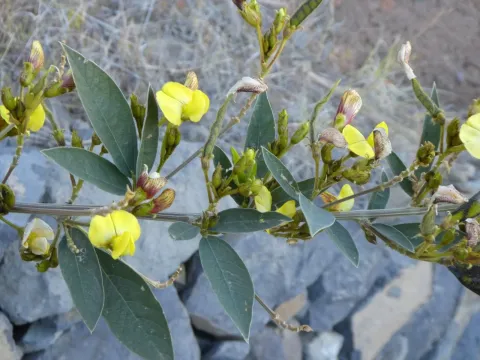
Pigeon pea
Cajanus
Pigeon pea is a warm-season legume typically sown when soil temperatures reach 20–25°C. It is a vital crop in tropical and subtropical regions where it is usually planted at the onset of the rainy season.
What the section contains

Pigeon pea
The seeds are sown at a depth of 3 to 5 centimeters. Proper seedbed preparation is essential to ensure uniform emergence, as the crop is sensitive to deep planting in heavy soils.
Row spacing typically ranges from 50 to 90 centimeters. Wider spacing is often used to accommodate the plant's natural tendency to branch significantly as it develops into a bushy structure.
In modern agricultural systems, precision seed drills are employed to maintain optimal plant density, which prevents excessive overcrowding while maximizing yield per hectare.
Weed management during the first six weeks is critical. Because pigeon pea is a slow starter, young seedlings can easily be outcompeted by aggressive weed species in the field.
Cajanus cajan belongs to the Fabaceae family. Its origins trace back to India, from where it spread extensively across tropical Africa, Asia, and the Americas as a staple crop.
The crop is highly renowned for its drought tolerance. It possesses a deep taproot system capable of extracting moisture from subsoil layers that are unreachable by many other legumes.
Pigeon pea thrives on a variety of well-drained soils, including sandy loams and clay loams. It shows excellent adaptation to soils with a wide pH range, though it avoids waterlogged sites.
As a short-day plant, its flowering is highly responsive to photoperiod. This sensitivity makes selecting the correct variety for a specific latitude essential for successful reproduction.
The plant is an efficient nitrogen fixer. By forming symbiotic relationships with Rhizobium bacteria, it enriches the soil with nitrogen, providing significant benefits to subsequent crops in a rotation.
Grain yields vary significantly based on genotype and management practices, typically ranging from 0.5 to 2.0 tonnes per hectare under rainfed conditions.
High-input cultivation systems using irrigation and improved hybrid seeds can push yields well beyond these figures. Selecting high-yielding, determinate varieties is a focus of modern research.
The plant produces large amounts of biomass. This foliage is a high-protein source for livestock, making pigeon pea a dual-purpose crop providing both grain for human consumption and fodder.
Pigeon pea is an integral component of agroforestry systems. It is often intercropped with cereals like sorghum or maize to improve overall field productivity and maintain soil health.
As a source of plant-based protein, it is vital for food security. The seeds are rich in minerals and vitamins, serving as a primary protein source for millions globally.
Fusarium wilt and Phytophthora blight are the most serious diseases affecting pigeon pea. These pathogens thrive in humid conditions and can lead to total crop failure if unchecked.
Pest pressure is intense, particularly from pod borers and pod-sucking bugs. These insects directly target the developing pods, significantly reducing seed quality and harvest volume.
Integrated pest management (IPM) is essential. This includes the use of resistant varieties, biological control, and targeted insecticide application during the critical pod-filling stage.
Viral diseases, often spread by aphid vectors, present a recurring challenge. Early detection and removal of affected plants help in limiting the spread within the field.
- Use of certified, treated seeds.
- Crop rotation to break disease cycles.
- Regular field scouting for early pest detection.
Harvesting is performed when the pods reach physiological maturity, indicated by a change in color and seed hardening within the pod shells.
Timing is crucial. If left too long, pods of many traditional varieties tend to shatter, causing significant harvest losses due to seed shedding in the field.
Modern harvest methods involve mechanical threshing once the grain moisture content drops to approximately 14%, which is the standard for safe long-term storage.
Post-harvest processing involves threshing and cleaning. Drying the seeds thoroughly under the sun is necessary to prevent mycotoxin development and ensure high storage quality.
Storage should occur in clean, dry, and cool facilities. Properly stored seeds maintain their nutritional value and germination potential for extended periods.