
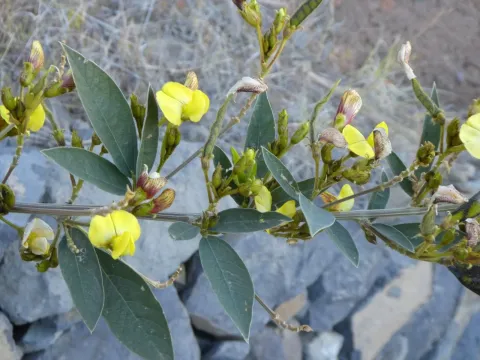
Pigeon pea
Cajanus Adans.
Pigeon pea (Cajanus cajan) is a perennial legume often grown as an annual crop in agricultural systems. Sowing is typically aligned with the start of the rainy season to ensure optimal moisture for seed germination.
What the section contains

Pigeon pea
The seeds require soil temperatures above +18°C to sprout. Sowing depth is generally between 3 to 5 cm, depending on the soil texture, ensuring the seeds are adequately covered to avoid desiccation.
Row spacing ranges from 45 to 60 cm. This spacing is crucial as it encourages branching and improves pod development while allowing for easier weed management between rows.
In many regions, intercropping pigeon pea with cereals like sorghum or maize is a common practice, which maximizes land use efficiency and minimizes the impact of pests on a single crop.
Farmers often use inoculated seeds to promote better nodulation, which enhances the nitrogen-fixing efficiency of the plant right from the early growth stages.
Originating from India, this crop is renowned for its extreme drought tolerance. Its deep taproot system allows it to reach moisture deep in the soil, making it a vital crop for arid climates.
The crop performs best in well-drained loamy or sandy soils. It is highly sensitive to waterlogging, which can quickly lead to root rot and complete failure of the stand.
Pigeon pea thrives in warm environments with temperatures between +20°C and +35°C. It is strictly sensitive to frost, which limits its distribution to tropical and subtropical latitudes.
It is a light-demanding plant; shade reduces its photosynthetic rate, leading to poor pod formation and reduced total yields.
The plant's ability to fix atmospheric nitrogen improves soil fertility, making it an excellent component of sustainable crop rotation systems globally.
On average, pigeon pea yields vary between 1 and 2.5 tonnes per hectare under standard agricultural conditions, depending on the cultivar and level of inputs applied.
The grain is a rich source of plant-based protein, providing essential amino acids, dietary fiber, and vitamins that are crucial for diets in many developing nations.
The crop provides secondary benefits through its green biomass, which can be harvested as high-quality forage for livestock or incorporated into the soil as green manure.
Pigeon pea is primarily processed into dal (split peas) or flour, which are staples in various culinary traditions due to their excellent shelf life and nutritional profile.
Advanced management practices, such as precision irrigation and proper weed control, have shown the potential to push yields even higher in commercial settings.
The most significant pests are pod borers, which can cause severe losses by feeding directly on the developing seeds inside the pods, often ruining a large percentage of the harvest.
Diseases such as Fusarium wilt and phytophthora blight are common in areas with high humidity or poor soil drainage, necessitating careful field site selection.
Integrated Pest Management (IPM) is the best strategy, combining resistant crop varieties with timely monitoring and biological control methods.
- Use of certified, disease-resistant seeds to prevent initial infections.
- Crop rotation to break the life cycle of soil-borne pathogens.
- Regular field scouting to catch early signs of pest outbreaks before they spread.
By keeping fields clean and managing density, farmers can significantly reduce the pressure of pests and diseases without relying heavily on chemical applications.
Harvesting usually occurs when the pods change color and begin to dry. This typically happens 4 to 6 months after planting, depending on the specific variety grown.
Farmers monitor grain moisture levels closely; harvesting too early leads to high moisture content and spoilage, while harvesting too late leads to pod shattering and field losses.
Mechanical harvesting with combines is increasingly common, though adjustments to the drum speed are necessary to avoid damaging the seeds during the threshing process.
Post-harvest handling involves thorough drying to ensure the grain moisture is below 12%, which is essential for preventing mold and preserving quality for storage.
Properly stored pigeon peas can remain viable and nutritious for over a year if kept in cool, dry, and insect-proof facilities.