
Pericopsis elata
Pericopsis elata
Description
Sowing dates
Propagation of Pericopsis elata in both natural forests and plantations is primarily achieved through seeds. The seeds exhibit high viability but require scarification to break dormancy and ensure uniform germination rates.
In nursery environments, seeds are sown in specialized growing media, maintaining high moisture and tropical temperature levels. The timing of sowing is critical and usually coincides with the beginning of the rainy season to support seedling establishment.
Once seedlings reach a height of 30 to 50 cm, they are ready for transplanting into plantation sites. Proper spacing is essential, as the species is light-demanding during its growth stages and suffers if planted too densely.
Natural regeneration is currently hindered by over-exploitation and slow growth rates. Consequently, modern forestry initiatives focus on nursery-grown saplings to ensure higher survival rates and genetic quality.
Managing the establishment phase on plantations requires vigilant monitoring of light levels. As the trees grow, they transition from shade-tolerant to light-demanding, necessitating selective clearing of the upper canopy to facilitate development.
Growing requirements
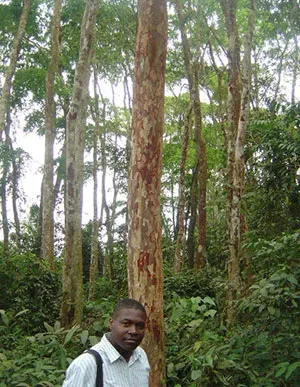
Pericopsis elata belongs to the Fabaceae family and is an iconic tropical timber species native to the equatorial rainforests of Africa, including countries like Cameroon, Congo, Ghana, and Ivory Coast.
The species thrives in deep, well-drained clay or loamy soils rich in organic matter. Soil drainage is a primary concern, as waterlogged conditions can lead to root rot and significant plantation losses.
Optimal environmental conditions involve consistent high temperatures with minimal seasonal variations. The species is highly sensitive to frost, restricting its viable cultivation to equatorial tropical regions.
Sufficient and evenly distributed rainfall is mandatory for healthy growth. Periods of prolonged drought significantly inhibit biomass accumulation, which ultimately impacts the quality and density of the mature timber.
Protection from high winds and intense direct sunlight is vital during the first year of growth. Successful plantation management involves incorporating protective border plants to shield young saplings from harsh environmental stressors.
Yield
This tree is cultivated specifically for its premium-quality hardwood, commercially known as African teak or Afzelia. The accumulation of high-value timber is a slow process that spans several decades.
The standard timber production cycle to reach an exploitable diameter ranges from 60 to 80 years. While various silvicultural treatments and fertilizers have been tested, growth rates remain biologically limited.
The volume of marketable timber depends heavily on early-stage maintenance. Regular pruning of lower branches is necessary to ensure the development of a straight, knot-free trunk, which is highly prized in the market.
Stand productivity per hectare is dictated by the natural density of the trees. Excessive crowding leads to significant competition for resources, which negatively influences trunk diameter and individual growth rates.
Sustainable forest management includes scheduled thinning operations to remove diseased or underdeveloped individuals. This practice ensures that the best-performing trees have sufficient space to reach their full potential.
Main diseases and pests
The primary threats to Pericopsis elata stands include fungal infections, which flourish in high-humidity, low-airflow environments. Root rot remains a major threat when soil drainage is inadequately managed.
Stem borers and other wood-boring insects pose a significant risk, particularly to younger trees. Damage to the bark often facilitates the entry of secondary pathogens that can lead to tree decline.
Human-induced factors remain the greatest threat to the species, including illegal logging and the conversion of forest land into agricultural plots, which continue to shrink its native habitat.
Defoliating insects can cause substantial leaf loss in young trees, hindering photosynthesis and weakening the sapling's overall defense mechanism against environmental pathogens.
- Continuous phytosanitary monitoring programs.
- Optimal tree spacing to enhance air circulation.
- Regular removal of diseased debris from the forest floor.
- Anti-poaching and legal protection measures.
Harvesting
Harvesting of Pericopsis elata is performed only after trees reach specific forest management diameter targets, typically requiring a trunk girth exceeding 80–100 cm to ensure the maturity of the wood.
Felling requires specialized expertise and heavy machinery to minimize damage to the remaining stand and ensure maximum efficiency during the subsequent bucking and processing stages.
Following harvest, the timber undergoes primary processing, including debarking and trimming. Controlled seasoning is essential to prevent internal cracking, warping, and structural defects in the high-density wood.
Logistics in tropical regions remain challenging, often dictated by the seasonal rains. Transportation routes must be meticulously planned to manage the supply chain effectively throughout the year.
Sustainable forestry practices mandate that for every tree harvested, a significant number of seedlings are planted to ensure the biological continuity of this highly valued and endangered timber resource.