
Honeybush
Cyclopia genistoides
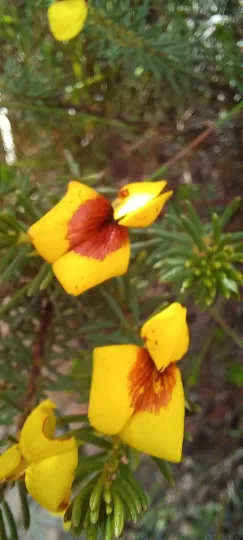
Description
Sowing dates
Honeybush (Cyclopia genistoides) belongs to the Fabaceae family. It is a perennial shrub primarily cultivated in South Africa. The propagation of this crop is usually carried out via seeds.
Seed sowing requires prior scarification or hot water treatment to overcome the seed's hard coat, which significantly accelerates germination. In nature, seeds germinate after wildfires, so agricultural practices often mimic thermal shock to activate the embryo.
Sowing is conducted in prepared nurseries during late winter or early spring, as the daylight hours begin to increase. The optimal temperature for germination should be maintained within the range of 15–20 degrees Celsius.
Transplanting seedlings to the permanent field is performed once they reach a height of 15–20 centimeters. It is crucial to ensure sufficient spacing between rows to allow for adequate airflow and sunlight penetration.
For successful establishment, the plantation must be watered abundantly in the first few months after planting. The crop is extremely sensitive to root system waterlogging, making good soil drainage a mandatory requirement.
Growing requirements
This species prefers regions with winter rainfall and dry, hot summers. The ideal habitat consists of sandy, nutrient-poor soils with an acidic pH level.
Honeybush is well-adapted to Mediterranean-type climate conditions. While the plant can withstand long periods of drought, full growth and development require moderate humidity during the cooler season.
Soils must be well-aerated and not prone to salinization. An excess of calcium or the application of alkaline fertilizers may negatively affect the shrub's development, potentially leading to leaf chlorosis.
Exposure to full sunlight is essential, as the culture is photophilous and requires maximum solar radiation to accumulate essential oils and antioxidants within its biomass.
In industrial cultivation, one must account for the plant's tendency to form symbiotic relationships with nitrogen-fixing bacteria, often making the application of mineral nitrogen fertilizers unnecessary or limited.
Yield
The first commercial harvest from honeybush plantations is typically gathered no sooner than two to three years after planting. Harvesting involves careful pruning of young shoots and leaves.
Crop yield is heavily dependent on the age of the bushes and planting density. A steady volume of biomass can be obtained per hectare if regular rejuvenation pruning is performed.
The raw material undergoes fermentation, which is a critical stage in the production of honeybush tea. Without proper processing, the dry mass lacks the characteristic flavor and aromatic profile.
Harvesting intensity must be balanced to ensure the shrub can recover effectively. Overloading the plant during its active growth period can lead to a shortened lifespan of the plantation.
Drying of the final fermented product is carried out in well-ventilated facilities or specialized dryers at controlled temperatures to prevent the growth of mold fungi.
Main diseases and pests
The main threat to the crop is root rot, which arises from improper irrigation schedules and poor soil drainage. Infections spread rapidly when moisture stagnates around the root zone.
Pests, such as spider mites and various types of scale insects, may attack the shoots during periods of extreme heat. Weakened plants become easy targets for sap-sucking insects.
Fungal leaf diseases often develop during periods of high humidity and poor ventilation in the plantation. Prevention consists of maintaining optimal planting density.
Protection from weeds is an important aspect, as they compete with honeybush for water and light. Mechanical weeding must be done carefully to avoid damaging the shallow root system.
In some regions, wild rodents may damage the bark of young plants, requiring the installation of fencing around the perimeter of agricultural land.
Harvesting
Harvesting is primarily done by hand to ensure the high quality of the raw material. It is important to collect only young, healthy shoots with an optimal concentration of valuable compounds.
The optimal time for harvesting is during the pre-flowering phase or the onset of flowering, when the concentration of beneficial substances in the aerial part of the plant reaches its peak.
The use of mechanized pruning tools is possible on large plantations but requires equipment adjustment to prevent excessive stem shredding.
After collection, the biomass is immediately sent for primary processing to prevent oxidation, which influences the color and quality of the finished tea.
Properly organized harvesting practices allow for extending the productive lifespan of an individual bush up to 10–12 years, making the crop economically viable for farming enterprises.